How to Gain Weight Fast – 10 Healthy Tips for Safe and Sustainable Weight Gain
While much of the world focuses on weight loss, there are many people who struggle to gain weight. Whether it’s due to a fast metabolism, medical conditions, or simply a naturally lean frame, being underweight can be just as challenging as being overweight. Gaining weight in a healthy way—building muscle and healthy fat rather than just adding belly fat—requires a thoughtful approach.
This guide provides science-backed strategies to help you gain weight safely and sustainably. You’ll learn which foods to eat, how to structure your meals, what exercises to do, and how to avoid common mistakes. With consistency and the right plan, you can achieve your weight gain goals while improving your overall health.
Why healthy weight gain Matters
Being underweight can lead to fatigue, weakened immunity, brittle bones, and nutrient deficiencies. The goal is not just to add any weight but to add muscle mass and healthy fat. This is achieved through a combination of calorie surplus, nutrient-dense foods, strength training, and adequate rest. A healthy weight gain rate is about 0.5–1 kg per week.
Key Principles for Healthy Weight Gain
| Principle | Why It Works |
|---|---|
| Calorie surplus | You must consume more calories than your body burns to gain weight. |
| Nutrient-dense foods | Focus on foods rich in protein, healthy fats, and complex carbs. |
| Strength training | Stimulates muscle growth so weight gained is mostly lean mass. |
| Consistent eating schedule | Prevents undereating and helps you hit daily calorie goals. |
| Quality sleep | Supports muscle recovery and hormonal balance. |
10 Proven Tips to Gain Weight
1. Create a Calorie Surplus
To gain weight, you need to eat more calories than your body uses. Start by calculating your maintenance calories (the amount you need to stay the same weight) and add 300–500 calories per day for gradual gain, or 700–1000 calories for faster gain. Track your intake for a few days to ensure you’re hitting your target.
2. Eat More Often
If you have a small appetite, eating three large meals can be overwhelming. Instead, aim for 5–6 smaller meals throughout the day. This makes it easier to consume more calories without feeling uncomfortably full. Include snacks like nuts, yogurt, fruit with nut butter, and smoothies.
3. Choose Calorie-Dense Foods
Focus on foods that pack a lot of calories into small portions. Examples:
-
Nuts and nut butters (almonds, peanuts, cashews)
-
Avocados
-
Full-fat dairy (milk, yogurt, cheese)
-
Dried fruits (dates, raisins, apricots)
-
Whole grains (oats, quinoa, brown rice)
-
Healthy oils (olive oil, coconut oil)
4. Prioritize Protein
Protein is essential for muscle growth. Without enough protein, extra calories can turn into fat instead of muscle. Aim for 1.6–2.2 grams of protein per kilogram of body weight daily. Good sources include eggs, chicken, fish, beef, tofu, legumes, and protein powders.
5. Add Healthy Fats
Fats are the most calorie-dense macronutrient, providing 9 calories per gram compared to 4 calories per gram for protein and carbs. Incorporate olive oil, nuts, seeds, fatty fish, and avocados into your meals. Drizzle oil over vegetables, add nut butter to smoothies, and use full-fat dressings.
6. Drink Your Calories
If solid foods fill you up quickly, liquids can help you add calories without feeling stuffed. Smoothies are an excellent option—blend milk, protein powder, banana, peanut butter, and oats for a calorie-rich drink. Other calorie-dense beverages include whole milk, 100% fruit juice, and healthy shakes.
7. Use Larger Plates and Portions
Sometimes eating more is psychological. Using larger plates can help you serve larger portions without feeling like you’re eating too much. Also, add extra ingredients to meals—for example, add cheese to eggs, olive oil to salads, or an extra scoop of rice to your dinner.
8. Include Strength Training
To ensure that extra calories go toward building muscle rather than fat, engage in resistance training. Focus on compound exercises like squats, deadlifts, bench presses, rows, and overhead presses. Aim for 3–4 sessions per week. If you’re new to lifting, consider working with a trainer to learn proper form.
9. Avoid Empty Calories
While you need a calorie surplus, not all calories are equal. Avoid loading up on sugary sodas, candies, and processed snacks that offer no nutritional value. These can lead to fat gain and poor health markers. Instead, choose nutrient-dense options that support muscle growth and overall well-being.
10. Get Enough Sleep and Manage Stress
Sleep and stress play major roles in weight management. Lack of sleep can lower muscle-building hormones and increase stress hormones. Aim for 7–9 hours of quality sleep per night. Practice stress-reducing activities like walking, meditation, or gentle yoga to support hormonal balance.
Sample High-Calorie Meal Plan
| Meal | Options |
|---|---|
| Breakfast | 2 scrambled eggs with cheese, 2 slices whole-grain toast with avocado, a glass of whole milk |
| Mid-Morning | Greek yogurt with honey, walnuts, and a banana |
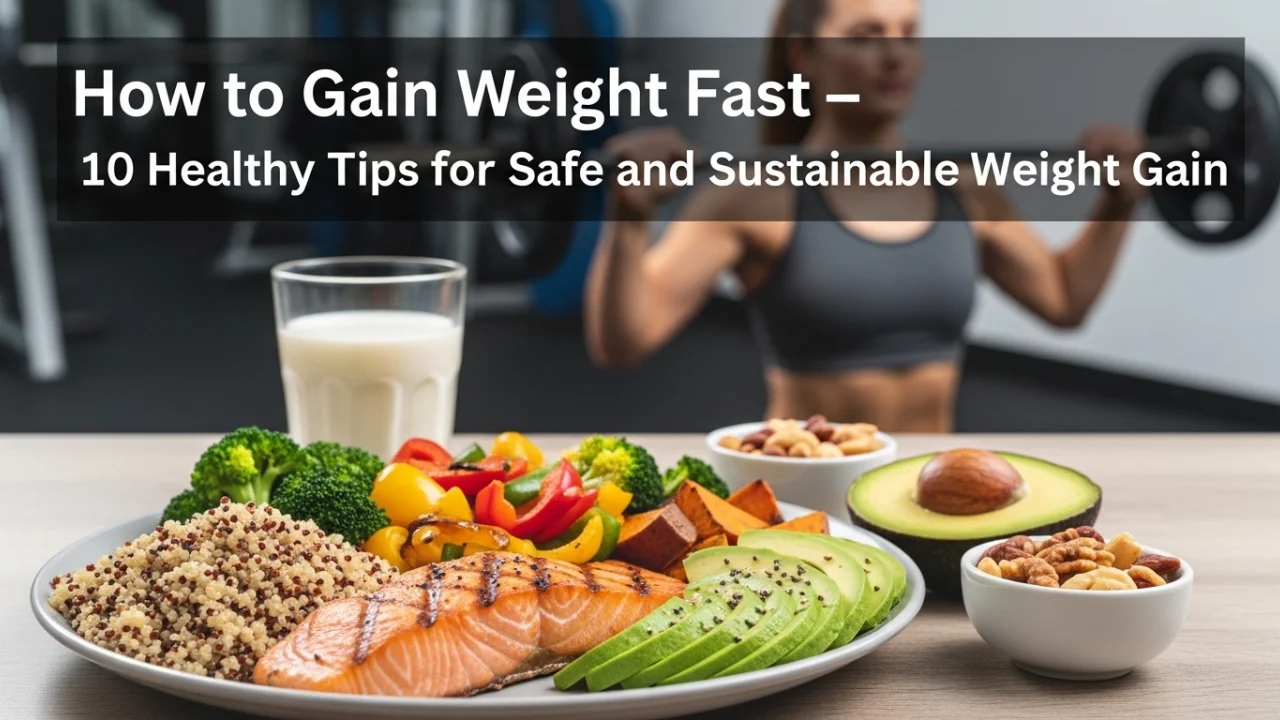
| Lunch | Grilled chicken breast with quinoa, roasted vegetables drizzled with olive oil |
| Afternoon | Smoothie: 1 cup milk, 1 scoop protein powder, 1 tablespoon peanut butter, 1 banana, handful spinach |
| Dinner | Baked salmon with sweet potato and steamed broccoli topped with butter |
| Evening | Cottage cheese with berries and almonds |
Common Weight Gain Mistakes to Avoid
| Mistake | Why It Backfires |
|---|---|
| Relying on junk food | Leads to unhealthy fat gain and nutrient deficiencies |
| Not eating enough protein | Extra calories are stored as fat instead of building muscle |
| Skipping strength training | Weight gained is mostly fat, not muscle |
| Inconsistent eating | Failing to hit calorie goals regularly slows progress |
| Ignoring sleep and stress | Hinders muscle recovery and appetite |
| Expecting overnight results | Healthy weight gain takes time and consistency |
Frequently Asked Questions (FAQS)
How fast can I gain weight safely?
A safe and sustainable rate is 0.5–1 kg per week. Faster gain often means excess fat or water retention.
What are the best foods for weight gain?
Calorie-dense whole foods: nuts, seeds, avocados, full-fat dairy, dried fruits, whole grains, lean meats, fatty fish, and healthy oils.
Do I need to exercise to gain weight?
Yes, strength training is essential to ensure the extra calories are used to build muscle rather than fat. Cardio is not necessary for weight gain but can be done in moderation for cardiovascular health.
Can I gain weight without eating junk food?
Absolutely. You can achieve a calorie surplus with nutrient-dense foods like nuts, avocados, whole grains, and protein sources. Junk food is not required.
Why am I not gaining weight despite eating a lot?
Possible reasons: not tracking calories accurately, having a very high metabolism, not eating enough consistently, or having an underlying medical condition. Keep a food diary and consult a doctor if you’re struggling.
What if I have a small appetite?
Eat more frequent, smaller meals. Drink calorie-dense smoothies. Avoid drinking water right before meals. Use calorie-rich additions like oils, nuts, and cheese to boost calorie content without increasing volume too much.
How long does it take to see results?
With consistency, you may notice small changes in energy, strength, and clothing fit within 2–4 weeks. Visible changes in weight typically appear after 6–8 weeks of consistent effort.
Conclusion
Gaining weight in a healthy way requires a combination of calorie surplus, nutrient-dense foods, strength training, and patience. It’s not about simply eating more—it’s about eating smart and building muscle. By following the strategies outlined here, you can achieve your weight gain goals while improving your overall health and vitality.
Start with small changes, track your progress, and adjust as needed. Remember, consistency over time is what leads to lasting results.