Veg Manchurian Recipe: Restaurant-Style Indo-Chinese at Home in 45 Minutes
Published: March 21, 2026 | Category: Indo-Chinese Recipes | Reading Time: 7 minutes
Why This Veg Manchurian Recipe Stands Out
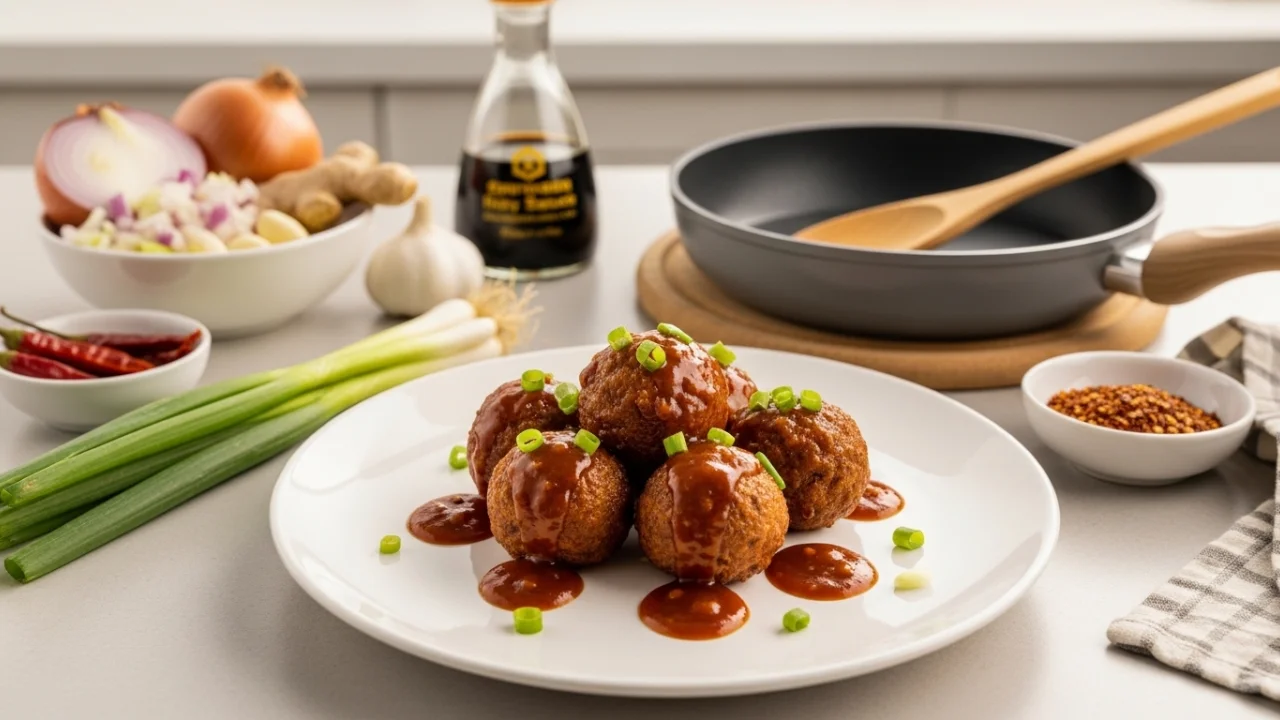
Veg Manchurian is one of the most popular Indo-Chinese dishes served in Indian restaurants. This crispy vegetable ball dish, coated in a savory-sweet sauce, has become a staple at parties, gatherings, and restaurant menus across India.
The challenge most home cooks face is achieving the perfect texture – crispy exterior with soft interior – and the authentic restaurant-style sauce that’s neither too thick nor too thin. Many homemade versions result in soggy balls or bland sauce.
This recipe addresses these common issues through specific techniques: proper vegetable moisture removal, correct binding agent ratio, optimal frying temperature, and balanced sauce preparation. Following these methods ensures consistent, professional results.
The recipe provides both dry and gravy versions, allowing flexibility based on preference and occasion.
Quick Recipe Information
⏱️ Prep Time: 25 minutes
👨🍳 Cook Time: 20 minutes
⏰ Total Time: 45 minutes
🍽️ Servings: 4 people (approximately 20-24 balls)
🌶️ Difficulty Level: Medium
💰 Estimated Cost: $6-8
Required Ingredients
For Vegetable Balls:
- Cabbage – 1.5 cups, finely chopped or grated
- Carrot – 1 medium, grated
- Capsicum (Bell Pepper) – 1/2 cup, finely chopped
- French beans – 1/4 cup, finely chopped
- Spring onions – 3 tablespoons, white and green parts separated
- Garlic – 1 tablespoon, finely minced
- Ginger – 1 tablespoon, finely minced
- Green chili – 2, finely chopped (adjust to taste)
- All-purpose flour (Maida) – 3 tablespoons
- Cornflour – 4 tablespoons (Substitute: 2 tablespoons rice flour + 2 tablespoons cornflour)
- Black pepper powder – 1/2 teaspoon
- Salt – 1 teaspoon (for vegetables)
- Oil – for deep frying
For Manchurian Sauce:
- Oil – 2 tablespoons
- Garlic – 1 tablespoon, finely chopped
- Ginger – 1 tablespoon, finely chopped
- Green chili – 2, slit lengthwise
- Spring onion whites – 3 tablespoons, chopped
- Onion – 1 medium, cut into squares
- Capsicum – 1 medium, cut into squares
Sauce Mixture:
- Soy sauce – 2 tablespoons
- Tomato ketchup – 3 tablespoons
- Red chili sauce – 1.5 tablespoons (Substitute: Sriracha sauce)
- Vinegar – 1 teaspoon (white vinegar or rice vinegar)
- Sugar – 1 teaspoon
- Black pepper powder – 1/2 teaspoon
- Salt – to taste
- Water – 1 cup
- Cornflour – 1.5 tablespoons (mixed with 3 tablespoons water for slurry)
For Garnish:
- Spring onion greens – 2 tablespoons, chopped
- Sesame seeds – 1 teaspoon (optional)
Step-by-Step Preparation Method
Phase 1: Preparing Vegetable Balls
Step 1: Vegetable Preparation
Finely chop or grate all vegetables as specified. Consistency in size ensures even cooking and binding.
Place chopped cabbage, carrot, capsicum, and french beans in a large bowl. Add 1 teaspoon salt and mix thoroughly.
Critical step: Let vegetables sit for 10 minutes. The salt draws out moisture. After 10 minutes, squeeze vegetables firmly using hands or clean cloth to remove excess water. This step is essential – excess moisture prevents proper binding and causes oil splatter during frying.
Step 2: Creating the Mixture
To the squeezed vegetables, add minced ginger, garlic, green chili, and spring onion whites. Mix well.
Add all-purpose flour, cornflour, and black pepper powder. Mix thoroughly using hands until mixture comes together.
Texture test: The mixture should be moist enough to form balls but not wet. When pressed, it should hold shape without crumbling. If too dry, add 1 tablespoon water. If too wet, add 1 tablespoon cornflour.
Avoid adding water unless absolutely necessary. Proper squeezing in Step 1 should provide adequate moisture.
Step 3: Shaping the Balls
Take small portions of mixture and roll into smooth, compact balls approximately 1.5 inches in diameter. Apply firm pressure while rolling to prevent balls from breaking during frying.
Professional tip: Wet hands slightly while shaping prevents sticking. Ensure no cracks on surface – cracks cause balls to break apart in hot oil.
Prepare all balls before starting frying process. Arrange on a plate without touching each other.
Step 4: Frying Process
Heat oil in a deep pan or kadhai. Oil should be at least 2-3 inches deep for proper frying.
Temperature test: Drop a small piece of mixture into oil. If it rises immediately with bubbles, temperature is correct (approximately 170-180°C / 340-360°F). If it sinks, oil is too cold. If it browns immediately, oil is too hot.
Gently slide 5-6 balls into hot oil. Don’t overcrowd – this reduces temperature and causes oil absorption.
Fry on medium-high heat for 6-7 minutes, turning occasionally for even browning. Balls should turn golden brown and crispy.
Remove using slotted spoon and place on paper towels to absorb excess oil. Maintain oil temperature between batches.
For extra crispy balls: Fry twice. First frying at medium heat for 5 minutes, remove and let cool for 5 minutes. Second frying at high heat for 2 minutes until deep golden.
Phase 2: Preparing Manchurian Sauce
Step 5: Sauce Base Preparation
Heat 2 tablespoons oil in a wok or large pan over high heat. High heat is essential for authentic Indo-Chinese flavor.
Add minced garlic and ginger. Sauté for 15-20 seconds until fragrant. Don’t let garlic brown – it becomes bitter.
Add slit green chilies and spring onion whites. Stir-fry for 30 seconds.
Step 6: Adding Vegetables
Add chopped onions and capsicum. Stir-fry on high heat for 2-3 minutes. Vegetables should remain slightly crunchy, not fully cooked.
High heat creates the characteristic “wok hei” (breath of wok) flavor essential in Indo-Chinese cooking.
Step 7: Sauce Creation
In a bowl, mix soy sauce, tomato ketchup, red chili sauce, vinegar, sugar, black pepper, and salt. Stir until sugar dissolves completely.
Pour this mixture into the wok. Add 1 cup water. Bring to a boil.
Flavor balance: Taste the sauce at this stage. Adjust seasoning:
- Too salty: add 1/2 teaspoon sugar and 2 tablespoons water
- Too sweet: add 1/2 tablespoon soy sauce
- Not spicy enough: add more chili sauce
- Too spicy: add 1 tablespoon ketchup
Step 8: Thickening the Sauce
Prepare cornflour slurry by mixing 1.5 tablespoons cornflour with 3 tablespoons cold water. Mix until lump-free.
When sauce is boiling, reduce heat to medium. Slowly add cornflour slurry while stirring continuously.
The sauce will thicken within 1-2 minutes. Desired consistency is coating consistency – it should coat a spoon without being too thick or watery.
Thickness control: Add more slurry if too thin (mix equal parts cornflour and water). Add water if too thick.
Step 9: Combining Balls with Sauce
For Dry Manchurian: Add fried balls directly to sauce. Toss gently on high heat for 1-2 minutes until balls are well-coated. Turn off heat immediately to maintain crispiness.
For Manchurian Gravy: Add slightly more water (1/2 cup) to sauce. Let balls sit in gravy for 2-3 minutes on low heat. This version is less crispy but more flavorful.
Garnish with chopped spring onion greens and sesame seeds.
Professional Techniques for Perfect Results
🔥 Tip 1: Moisture Control is Critical
The single most important factor for crispy Manchurian balls is moisture removal. After salting vegetables, squeeze them at least twice – once after 10 minutes, and again before adding binding agents. Excess moisture causes:
- Soggy balls that absorb oil
- Mixture that doesn’t bind properly
- Balls that break during frying
🔥 Tip 2: Cornflour to Maida Ratio
The ideal ratio is approximately 4:3 (cornflour to all-purpose flour). Cornflour provides crispiness, while maida provides binding. Using only cornflour makes balls too hard. Using only maida makes them dense and chewy. This specific ratio creates optimal texture.
🔥 Tip 3: High Heat for Sauce
Authentic Indo-Chinese flavor requires high heat cooking. The sauce should be prepared quickly on high flame. This creates slight charring on vegetables and develops complex flavors. Low heat cooking results in flat, one-dimensional taste.
🔥 Tip 4: Timing the Final Toss
For maintaining maximum crispiness, add fried balls to sauce only when ready to serve. Extended sitting in sauce makes them soft. Restaurants prepare balls in advance but add to sauce only upon order. For parties, fry balls ahead and toss in freshly made hot sauce just before serving.
Common Problems and Solutions
Problem 1: Balls Breaking During Frying
Solution: This occurs due to insufficient binding or improper shaping. Ensure vegetables are thoroughly squeezed to remove moisture. Add an extra tablespoon of cornflour if mixture feels loose. Roll balls with firm pressure, ensuring no cracks on surface. Allow shaped balls to rest for 5 minutes before frying – this helps binding set.
Problem 2: Balls Absorbing Too Much Oil
Solution: Incorrect oil temperature is the primary cause. If oil is not hot enough, balls absorb oil before forming a crispy exterior. Always test temperature with a small piece first. Maintain consistent heat – don’t add too many balls at once as this reduces temperature. After frying, drain on paper towels and change paper if it becomes saturated.
Problem 3: Sauce Too Thick or Too Thin
Solution: Cornflour quantity directly affects consistency. For thin sauce: prepare additional slurry (1 tablespoon cornflour + 2 tablespoons water) and add slowly while stirring until desired thickness achieved. For thick sauce: add water 2 tablespoons at a time while stirring. Bring to boil again after adding water.
Problem 4: Bland or Unbalanced Flavor
Solution: Proper balance between salty (soy sauce), sweet (ketchup, sugar), spicy (chili sauce), and sour (vinegar) is essential. Taste sauce before adding balls and adjust. Common fix: add 1/2 tablespoon soy sauce and 1/2 teaspoon sugar if bland. If too salty, add more ketchup and water. The sauce should have pronounced flavor as vegetables balls are relatively plain.
Serving Suggestions and Variations
Best Accompaniments:
- Fried rice – vegetable, Schezwan, or plain
- Hakka noodles – most traditional pairing
- Steamed rice – for gravy version
- Spring rolls – as part of Indo-Chinese meal
- Chili garlic noodles – spicy combination
Popular Variations:
Schezwan Manchurian: Replace red chili sauce with Schezwan sauce for spicier version.
Manchurian with Pineapple: Add 1/2 cup pineapple chunks in sauce for sweet-tangy variation.
Paneer Manchurian: Add 1/2 cup paneer cubes along with vegetable balls.
Cauliflower Manchurian: Replace mixed vegetables with only cauliflower florets (gobi manchurian).
Storage Guidelines:
Fried Balls: Store in airtight container in refrigerator for 2-3 days. Reheat in oven at 180°C for 5-7 minutes to restore crispiness. Avoid microwave as it makes them soggy.
Sauce: Can be prepared ahead and stored separately for 2 days in refrigerator. Reheat and adjust consistency before combining with balls.
Complete Dish: Not recommended for storage as balls lose crispiness. Best consumed fresh.
Frequently Asked Questions
Q1: Can this recipe be made without deep frying?
Yes, baking and air-frying are viable alternatives. For baking: preheat oven to 200°C (400°F), brush balls with oil, and bake for 20-25 minutes, turning halfway. For air-frying: cook at 180°C for 12-15 minutes, shaking basket every 5 minutes. Results will be less crispy than deep-fried version but significantly healthier with 70-80% less oil.
Q2: What vegetables can be substituted or added?
The base vegetables (cabbage, carrot, capsicum) are recommended for authentic taste and texture. However, additions include: finely chopped broccoli, grated beetroot (small quantity for color), corn kernels, or green peas. Avoid watery vegetables like tomatoes or cucumbers. Maintain total vegetable quantity at approximately 3 cups regardless of variety used.
Q3: Why do restaurant Manchurian balls taste different?
Professional restaurants use MSG (monosodium glutamate) which enhances savory flavor significantly. This recipe achieves similar depth through proper seasoning balance and high-heat cooking technique. For authentic restaurant taste, add 1/4 teaspoon Ajinomoto (MSG) to sauce, though this is optional and not necessary for excellent results.
Q4: Can the recipe be made gluten-free?
Yes, replace all-purpose flour with rice flour or chickpea flour (besan). Use tamari instead of regular soy sauce as it’s gluten-free. Replace cornflour with arrowroot powder or tapioca starch. The texture will be slightly different but still delicious. Ensure all sauces used are certified gluten-free as some contain wheat-based thickeners.
Nutritional Information and Health Considerations
Per Serving (approximately 5-6 balls with sauce):
- Calories: 280-320 kcal
- Protein: 6g
- Carbohydrates: 32g
- Fat: 15g (deep-fried version)
- Fiber: 4g
- Sodium: 850mg
Healthier Modifications:
- Bake or air-fry instead of deep frying (reduces fat by 60-70%)
- Use low-sodium soy sauce
- Reduce sugar to 1/2 teaspoon
- Increase vegetable quantity in balls
- Add protein sources like tofu or chickpeas
Conclusion
Veg Manchurian represents the perfect fusion of Chinese cooking techniques with Indian flavors. Success in this recipe depends on three critical factors: proper moisture removal from vegetables, maintaining correct frying temperature, and achieving balanced sauce flavor.
The recipe provides restaurant-quality results when techniques are followed precisely. The difference between average and exceptional Manchurian lies in attention to detail – from vegetable preparation through final sauce coating.
For optimal results, prepare components systematically without rushing. The investment in proper technique yields significantly superior taste and texture compared to shortcuts.
This dish works equally well as an appetizer for parties or main course when served with fried rice or noodles. The versatility and crowd-pleasing nature make it valuable addition to any home cook’s repertoire.