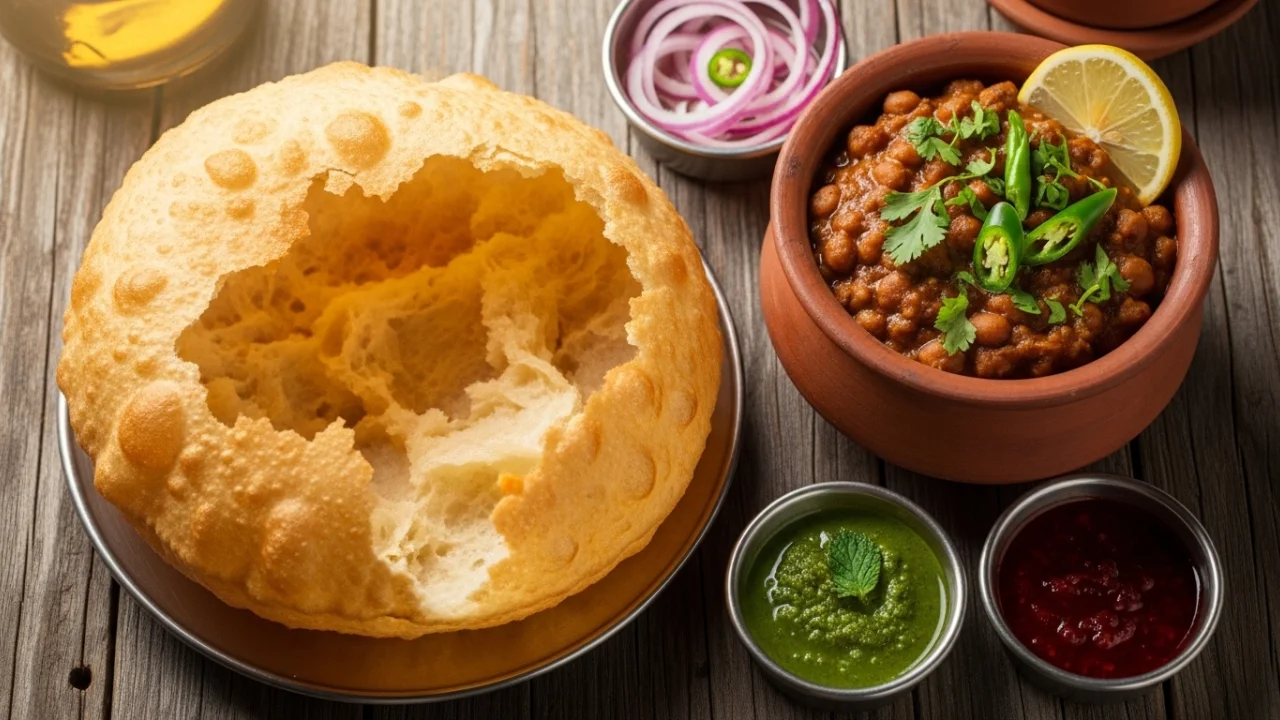
Chole Bhature Recipe: Authentic Punjabi Style in 90 Minutes with Restaurant Taste
Published: March 21, 2026 | Category: Indian Main Course | Reading Time: 8 minutes
Introduction to Authentic Chole Bhature
Chole Bhature represents one of the most iconic dishes in North Indian cuisine, particularly associated with Punjab and Delhi street food culture. This combination consists of spicy chickpea curry (chole) paired with deep-fried leavened bread (bhature), creating a hearty meal beloved across India.
The primary challenges in preparing authentic chole bhature at home include achieving the dark, rich gravy color characteristic of restaurant-style chole, developing the proper tangy flavor profile, and creating bhature that puff up perfectly while remaining soft yet crispy. Many home versions result in pale, bland curry and flat, dense bread.
This recipe addresses these issues through specific techniques: tea bag infusion for color, pomegranate seed powder for tanginess, proper chickpea cooking methods, and precise dough hydration for perfect bhature. Following these systematic approaches ensures restaurant-quality results.
Both components require attention to detail but are manageable when approached methodically with proper preparation and timing.
Recipe Overview
┌─────────────────────────┬────────────────────────────────────┐
│ Parameter │ Details │
├─────────────────────────┼────────────────────────────────────┤
│ Cuisine Type │ North Indian (Punjabi) │
├─────────────────────────┼────────────────────────────────────┤
│ Course │ Main Course │
├─────────────────────────┼────────────────────────────────────┤
│ Difficulty Level │ Medium │
├─────────────────────────┼────────────────────────────────────┤
│ Prep Time │ 30 minutes + 8 hours soaking │
├─────────────────────────┼────────────────────────────────────┤
│ Cook Time │ 60 minutes │
├─────────────────────────┼────────────────────────────────────┤
│ Total Time │ 90 minutes (active cooking) │
├─────────────────────────┼────────────────────────────────────┤
│ Servings │ 4-5 people │
├─────────────────────────┼────────────────────────────────────┤
│ Calories per Serving │ Approx. 580 kcal │
├─────────────────────────┼────────────────────────────────────┤
│ Dietary │ Vegetarian (Vegan adaptable) │
├─────────────────────────┼────────────────────────────────────┤
│ Estimated Cost │ $8 – $12 │
└─────────────────────────┴────────────────────────────────────┘
Required Ingredients
For Chole (Chickpea Curry):
- Dried chickpeas (kabuli chana) – 1.5 cups (Substitute: 3 cups canned chickpeas, though dried preferred for texture)
- Black tea bags – 2 (provides dark color)
- Baking soda – 1/4 teaspoon (for pressure cooking)
- Onions – 2 large, finely chopped
- Tomatoes – 3 large, pureed or finely chopped
- Ginger-garlic paste – 2 tablespoons
- Green chilies – 3-4, slit lengthwise
- Oil or ghee – 4 tablespoons
Chole Spice Mix:
- Cumin seeds – 1 teaspoon
- Coriander powder – 2 tablespoons
- Red chili powder – 1.5 teaspoons (adjust to heat preference)
- Turmeric powder – 1/2 teaspoon
- Garam masala – 1.5 teaspoons
- Dried pomegranate seeds powder (anardana) – 1 tablespoon (Substitute: 1 tablespoon lemon juice)
- Amchur (dried mango) powder – 1 teaspoon (Substitute: additional lemon juice)
- Chole masala – 2 tablespoons (store-bought or homemade)
- Salt – to taste (approximately 1.5 teaspoons)
For Bhature (Fried Bread):
- All-purpose flour (maida) – 2.5 cups
- Semolina (sooji/rava) – 2 tablespoons (adds crispiness)
- Plain yogurt – 1/2 cup, at room temperature
- Sugar – 1 teaspoon
- Salt – 1 teaspoon
- Baking powder – 1/2 teaspoon
- Baking soda – 1/4 teaspoon
- Oil – 2 tablespoons (for dough) + oil for deep frying
- Warm water – as needed (approximately 1/4 to 1/3 cup)
For Garnish and Serving:
- Fresh coriander leaves – 1/4 cup, chopped
- Ginger – 1-inch piece, julienned
- Red onions – 1 medium, thinly sliced
- Lemon wedges – 4-5
- Green chilies – 2-3, whole
Kitchen Equipment Needed
- Pressure cooker – For cooking chickpeas efficiently
- Heavy-bottomed pan or kadhai – For preparing chole gravy
- Large mixing bowl – For bhature dough preparation
- Rolling pin and board – For rolling bhature
- Deep frying pan or kadhai – Minimum 3-inch depth for frying
- Slotted spoon – For removing bhature from oil
- Wet cloth – For covering dough during fermentation
Step-by-Step Preparation Method
Phase 1: Chickpea Preparation (Night Before)
Step 1: Soaking Chickpeas
Measure 1.5 cups dried chickpeas and rinse thoroughly under running water until water runs clear. This removes dust and debris.
Place chickpeas in a large bowl with 4-5 cups water. Add 2 black tea bags to the soaking water. The tea provides tannins that darken chickpeas during cooking, creating authentic restaurant-style dark color.
Soak for minimum 8 hours or overnight. Chickpeas will approximately double in size. Proper soaking reduces cooking time significantly and ensures even cooking.
Technical note: Soaking in tea-infused water initiates the coloring process that continues during pressure cooking.
Step 2: Pressure Cooking Chickpeas
Drain soaked chickpeas, discarding tea bags. Transfer to pressure cooker with fresh water covering chickpeas by 2 inches.
Add 1/4 teaspoon baking soda and 1/2 teaspoon salt. The baking soda softens chickpeas faster and helps maintain dark color.
Pressure cook for 3-4 whistles on high heat, then reduce to medium and cook for 15 minutes. Turn off heat and allow pressure to release naturally.
Doneness test: Chickpeas should be soft enough to mash easily between fingers but not mushy. If undercooked, cook for additional 5 minutes under pressure.
Reserve cooking liquid – approximately 2 cups. This starchy liquid enhances gravy texture and flavor.
Phase 2: Chole Masala Preparation
Step 3: Onion Base Preparation
Heat 4 tablespoons oil or ghee in heavy-bottomed pan over medium-high heat. Add 1 teaspoon cumin seeds. When seeds splutter (approximately 15 seconds), add finely chopped onions.
Sauté onions for 10-12 minutes, stirring frequently. Onions should turn deep golden brown. This caramelization develops sweetness and depth essential for authentic chole flavor.
Browning importance: Properly browned onions create the foundation flavor. Pale onions result in bland curry. The browning process cannot be rushed without compromising taste.
Step 4: Aromatics Addition
Add 2 tablespoons ginger-garlic paste to browned onions. Sauté for 2 minutes until raw smell disappears and mixture turns aromatic.
Add slit green chilies. These provide heat and aromatic notes distinct from dried chili powder.
Step 5: Tomato Integration
Add pureed or finely chopped tomatoes. Cook on medium heat for 12-15 minutes, stirring occasionally. Tomatoes should break down completely and oil should begin separating from masala.
Visual indicator: Masala is ready when mixture appears paste-like and oil glistens on surface. Raw tomato smell should be completely eliminated.
Step 6: Spice Incorporation
Reduce heat to medium-low. Add coriander powder, red chili powder, turmeric powder, anardana powder, amchur powder, and chole masala. Stir continuously for 2-3 minutes to cook spices and prevent burning.
Raw spices taste bitter and lack depth. Proper cooking releases essential oils and develops complex flavors characteristic of restaurant-style chole.
Step 7: Chickpea Addition and Simmering
Add cooked chickpeas along with 2 cups reserved cooking liquid. If liquid insufficient, add plain water. Mixture should have thin gravy consistency at this stage.
Bring to boil, then reduce heat to low. Simmer uncovered for 20-25 minutes, stirring occasionally. Gravy will thicken and chickpeas will absorb flavors.
Mashing technique: Using back of ladle, lightly mash 10-15 chickpeas against pan side. This releases starch, thickening gravy naturally and improving mouthfeel.
Step 8: Final Seasoning
Add garam masala and adjust salt. Simmer for additional 5 minutes.
Taste and adjust tanginess by adding more anardana powder or lemon juice if needed. The chole should have balanced spicy-tangy-savory profile.
Turn off heat and let chole rest for 10 minutes before serving. This resting period allows flavors to meld.
Phase 3: Bhature Dough Preparation
Step 9: Dry Ingredients Mixing
In large mixing bowl, combine 2.5 cups all-purpose flour, 2 tablespoons semolina, 1 teaspoon sugar, 1 teaspoon salt, 1/2 teaspoon baking powder, and 1/4 teaspoon baking soda.
Mix thoroughly using hands or whisk. Ensure leavening agents distribute evenly throughout flour.
Step 10: Wet Ingredients Addition
Create well in center of dry ingredients. Add 1/2 cup room-temperature yogurt and 2 tablespoons oil.
Begin mixing from center, gradually incorporating flour from edges. The mixture will appear crumbly initially.
Step 11: Dough Kneading
Add warm water gradually, 2 tablespoons at a time, while kneading. The dough should be soft, slightly sticky, and pliable.
Knead for 8-10 minutes until dough becomes smooth and elastic. Proper kneading develops gluten structure essential for bhature to puff during frying.
Consistency check: Dough should be softer than regular bread dough but not sticky enough to adhere to hands. A slight stickiness is acceptable and preferred.
Step 12: Fermentation
Apply thin layer of oil over dough surface. Cover bowl with damp cloth and place in warm location.
Allow to ferment for 2-3 hours. Dough should increase in volume by approximately 50%. Fermentation develops flavor and creates air pockets essential for puffing.
Temperature note: Ideal fermentation temperature is 27-32°C (80-90°F). In cold climates, place bowl in slightly warm oven (lowest setting, then turned off).
Phase 4: Bhature Frying
Step 13: Dough Portioning
After fermentation, gently punch down dough to release gas. Avoid aggressive handling which destroys air pockets.
Divide dough into 10-12 equal portions. Roll each portion into smooth ball. Keep balls covered with damp cloth to prevent drying.
Step 14: Rolling Technique
Take one dough ball. Flatten slightly and dust with dry flour on both sides.
Roll into oval or circular shape approximately 6-7 inches in diameter and 1/4 inch thick. The bhatura should be thicker than regular roti but thinner than naan.
Rolling tip: Roll from center outward, rotating dough frequently. Avoid rolling pin going over edges as this seals them, preventing puffing.
Step 15: Oil Heating and Temperature Testing
Heat oil for deep frying in kadhai or deep pan. Oil should be at least 3 inches deep.
Test temperature by dropping small dough piece. It should rise immediately with bubbles. Ideal temperature is 180-190°C (350-375°F).
Temperature management: Too hot oil browns exterior before cooking interior. Too cool oil results in greasy, non-puffy bhature.
Step 16: Frying Process
Gently slide rolled bhatura into hot oil. It should sink briefly, then begin rising and expanding.
Using back of slotted spoon, gently press bhatura top with circular motion. This encourages puffing. After 30-40 seconds, flip to other side.
Fry until golden brown on both sides (approximately 2-3 minutes total). The bhatura should puff into balloon-like shape.
Remove using slotted spoon and drain on paper towels. Serve immediately while hot and puffy.
Puffing troubleshooting: If bhatura doesn’t puff, dough may be too stiff, rolling too thick, or oil temperature incorrect. Adjust accordingly for next batch.
Professional Techniques and Tips
🔥 Technique 1: Tea Bag Method for Authentic Color
Professional restaurants achieve dark chole color through various methods including artificial colors. The tea bag method provides natural alternative producing similar deep brown color. Black tea tannins react with chickpea skins during cooking, creating characteristic dark appearance. This technique also adds subtle astringency balancing richness. Use only black tea – green tea lacks necessary tannins.
🔥 Technique 2: Double Leavening for Perfect Bhature
Combining both baking powder and baking soda creates superior puffing compared to using single leavening agent. Baking powder provides sustained lift during frying, while baking soda reacts with yogurt acidity for immediate lift. This dual-action approach ensures reliable puffing even with temperature variations. Additionally, yogurt contributes tanginess and tenderness to final product.
🔥 Technique 3: Controlled Onion Caramelization
The 10-12 minute onion browning process develops complex flavor compounds through Maillard reaction. This non-enzymatic browning creates hundreds of flavor molecules contributing depth and sweetness. Insufficient browning results in one-dimensional taste regardless of spice additions. The key is medium-high heat with frequent stirring – high heat burns exterior before interior browns; low heat steams rather than browns.
🔥 Technique 4: Gravy Consistency Management
Authentic chole gravy should coat chickpeas without being soupy or too thick. The ideal consistency resembles heavy cream. This is achieved through combination of starch from chickpea cooking liquid, starch released from mashed chickpeas, and prolonged simmering for evaporation. Adding additional chickpea water during simmering allows better control than adding plain water which dilutes flavor.
Common Problems and Solutions
Problem 1: Chole Lacks Dark Color
Cause: Insufficient tea bag soaking, skipping tea altogether, or using green tea instead of black tea.
Solution: For already-cooked pale chickpeas, steep 2 tea bags in 1 cup hot water for 10 minutes. Add this concentrated tea to gravy during simmering. Alternatively, add 1/4 teaspoon kitchen-safe food coloring (brown or caramel).
Prevention: Always soak chickpeas overnight with black tea bags. Use cooking liquid (which contains released tannins) in gravy rather than discarding.
Problem 2: Bhature Don’t Puff
Cause: Multiple factors including over-kneaded dough, insufficient fermentation, incorrect rolling technique, or improper oil temperature.
Solution: For current batch, ensure oil is adequately hot (test with dough scrap). Press center gently but firmly with slotted spoon back while frying. For future batches, allow longer fermentation (3-4 hours), roll slightly thicker, and ensure edges aren’t sealed during rolling.
Prevention: Maintain soft, pliable dough consistency. Don’t skip fermentation time. Roll from center outward without going over edges.
Problem 3: Gravy Too Thin or Watery
Cause: Excessive cooking liquid addition, insufficient simmering time, or not mashing any chickpeas.
Solution: Continue simmering uncovered on medium heat until desired consistency achieved. Mash additional 15-20 chickpeas to release starch. Alternatively, mix 1 tablespoon besan (gram flour) with 3 tablespoons water and add to gravy while stirring.
Prevention: Add cooking liquid gradually. Simmer adequate time for natural reduction. Always mash some chickpeas for thickening.
Problem 4: Chole Lacks Tangy Flavor
Cause: Insufficient anardana powder, skipping amchur, or using old spices with diminished potency.
Solution: Add 1-2 tablespoons lemon juice or 1 additional tablespoon anardana powder. Simmer for 5 minutes after addition. Taste and adjust gradually – excess tanginess is difficult to correct.
Prevention: Use fresh anardana and amchur powders. These spices lose potency over time. Replace every 6 months for optimal flavor.
Serving Suggestions and Pairings
Traditional Accompaniments:
- Pickled onions – Thinly sliced red onions with lemon juice and salt, prepared 30 minutes before serving
- Green chutney – Mint-coriander chutney provides cooling contrast to spicy chole
- Achaar (Indian pickle) – Mango or mixed vegetable pickle adds tangy, spicy element
- Sliced onions and lemon wedges – Simple, essential accompaniments
Beverage Pairings:
- Lassi (sweet or salted) – Traditional yogurt drink balances richness and heat
- Chaas (buttermilk) – Light, digestive beverage
- Masala chai – For breakfast service
- Fresh lime soda – Refreshing option for lunch
Complete Meal Suggestions:
Traditional North Indian Breakfast:
- Chole Bhature
- Sweet lassi
- Mixed pickle
- Fresh fruit
Festive Lunch Menu:
- Chole Bhature as main
- Jeera rice on side
- Raita (yogurt salad)
- Papad
- Gulab jamun for dessert
Presentation Tips:
Serve chole in individual bowls or large serving dish garnished with fresh coriander, julienned ginger, and whole green chilies. Arrange hot bhature on separate plate lined with paper towel to absorb excess oil. Provide small bowls of pickled onions and lemon wedges on side.
Storage and Reheating Instructions
Chole Storage:
Refrigeration: Store cooled chole in airtight container for 4-5 days. Flavor improves on second and third day as spices continue developing.
Freezing: Transfer to freezer-safe container. Freeze for up to 3 months. Leave 1-inch headspace for expansion.
Thawing: Transfer to refrigerator 12 hours before use for gradual thawing. Alternatively, thaw in microwave using defrost setting.
Chole Reheating:
Stovetop method (best): Transfer to pan, add 1/4 cup water, heat on medium flame while stirring occasionally until heated through (8-10 minutes).
Microwave method: Place in microwave-safe bowl, cover loosely, heat on high for 2-3 minutes, stirring halfway.
Bhature Storage and Reheating:
Storage: Bhature don’t store well and are best consumed fresh. If necessary, store at room temperature wrapped in foil for maximum 4-6 hours.
Reheating: Reheat in preheated oven at 150°C (300°F) for 3-4 minutes. Avoid microwave as it makes bhature chewy and tough.
Make-ahead strategy: Prepare dough ahead and refrigerate for up to 24 hours. Bring to room temperature before rolling and frying.
Nutritional Information
Per Serving (2 bhature + 1 cup chole):
Macronutrients:
- Calories: 580 kcal
- Protein: 18 g
- Carbohydrates: 72 g
- Fat: 24 g
- Fiber: 12 g
- Sugar: 8 g
- Sodium: 920 mg
Micronutrients:
- Iron: 4.5 mg (25% Daily Value)
- Calcium: 120 mg (12% DV)
- Vitamin C: 18 mg (20% DV)
- Folate: 280 mcg (70% DV)
Health Considerations:
Protein source: Chickpeas provide excellent plant-based protein and fiber, making this relatively filling meal.
Calorie density: Deep-fried bhature contribute significant calories and fat. For healthier version, serve chole with tandoori roti or steamed rice instead.
Sodium content: Restaurant-style chole contains high sodium. Reduce salt by 25-30% for home preparation if monitoring sodium intake.
Allergen information: Contains gluten (wheat flour in bhature) and dairy (yogurt). Gluten-free alternative: serve with gluten-free roti. Vegan alternative: omit yogurt from bhature or use plant-based yogurt.
Variations and Adaptations
Variation 1: Amritsari Chole
Add 2 tea bags directly to pressure cooker with chickpeas for intensely dark color. Increase anardana powder to 2 tablespoons. This Amritsar-style version is darker and more tangy than standard preparation.
Variation 2: Kulcha Chole
Replace bhature with kulcha (stuffed flatbread). Prepare dough similarly but roll thinner and cook on tawa (griddle) instead of deep frying. This provides similar taste with significantly fewer calories.
Variation 3: Gluten-Free Bhature
Substitute all-purpose flour with combination of rice flour (1.5 cups) and tapioca starch (1 cup). Add 1 tablespoon psyllium husk for binding. Texture differs from traditional bhature but provides acceptable gluten-free alternative.
Variation 4: Instant Pot Chole
Soak chickpeas for only 4 hours. Pressure cook in Instant Pot with tea bags for 35 minutes on high pressure with natural release. Reduces total preparation time by 50%.
Frequently Asked Questions
Q1: Can canned chickpeas be used instead of dried?
Yes, though dried chickpeas are preferred for superior texture and authentic flavor. If using canned, rinse thoroughly to remove excess sodium. Skip pressure cooking step. Add chickpeas directly to prepared gravy. Simmer for 15-20 minutes for flavor absorption. Color will be lighter – compensate by adding tea decoction directly to gravy.
Q2: Why do bhature sometimes become hard after cooling?
Hardening occurs when bhature contain insufficient fat (oil/yogurt) in dough, are over-fried, or cool in uncovered state. To prevent, ensure adequate oil in dough, fry until just golden (not dark brown), and keep fried bhature covered with foil or cloth while preparing remaining batch. Consume within 1-2 hours for best texture.
Q3: How can chole be made less spicy while maintaining flavor?
Reduce or eliminate red chili powder and green chilies. Increase coriander powder to 3 tablespoons for flavor depth. Add 2 tablespoons cashew paste or cream to gravy – this adds richness while reducing perceived heat. Use Kashmiri chili powder instead of regular red chili for color without excessive spiciness.
Q4: What causes bhature to absorb excessive oil?
Oil absorption occurs primarily due to incorrect temperature – oil that’s too cool. Bhature should puff immediately upon contact with oil. If they sink and remain submerged, temperature is insufficient. Other causes include over-fermented dough (becomes too soft) or rolling too thin. Maintain temperature at 180-190°C and proper dough consistency.
Q5: Can this recipe be made vegan?
Yes, with minor modifications. For chole, use oil instead of ghee – no other changes needed. For bhature, replace dairy yogurt with thick coconut yogurt or cashew yogurt. The fermentation and puffing work similarly with plant-based yogurt. Ensure yogurt is at room temperature and unsweetened.
Chef’s Notes
Chickpea quality: Older chickpeas (stored over 1 year) require longer soaking and cooking time. For best results, purchase from stores with high turnover ensuring fresh product.
Regional variations: Punjabi chole tends toward darker, tangier profile. Delhi-style is slightly sweeter with more tomatoes. Amritsari version is darkest and most tangy. Adjust spice levels according to regional preference.
Scaling recipe: When doubling recipe, increase cooking time by 15-20% rather than doubling it. Spices don’t need complete doubling – increase by 1.5x for better balance.
Commercial chole masala: Quality varies significantly between brands. MDH, Everest, and Shan are reliable options. Homemade chole masala can be prepared by roasting and grinding coriander seeds, cumin seeds, dried pomegranate seeds, black cardamom, cinnamon, and cloves.
Make-ahead strategy: Chole actually improves with time. Prepare 1 day ahead for best flavor development. Bhature dough can be prepared morning-of and allowed to ferment at room temperature, then refrigerated until frying time.
Conclusion
Chole Bhature preparation requires attention to multiple components – properly cooked chickpeas, well-spiced gravy, and perfectly puffed bread. Success depends on mastering individual techniques: chickpea soaking and pressure cooking, controlled onion browning, adequate spice cooking, and proper dough fermentation.
While recipe appears lengthy, most steps are straightforward when approached systematically. The overnight chickpea soaking and 2-3 hour dough fermentation can be planned around schedule, making actual active cooking time manageable.
This dish represents comfort food at its finest – rich, satisfying, and suitable for occasions ranging from special weekend breakfasts to festive celebrations. Mastering chole bhature provides foundation for understanding broader North Indian cooking techniques applicable to numerous other dishes.
Tags: Chole Bhature Recipe, Punjabi Chole, Bhature Recipe, North Indian Food, Chickpea Curry