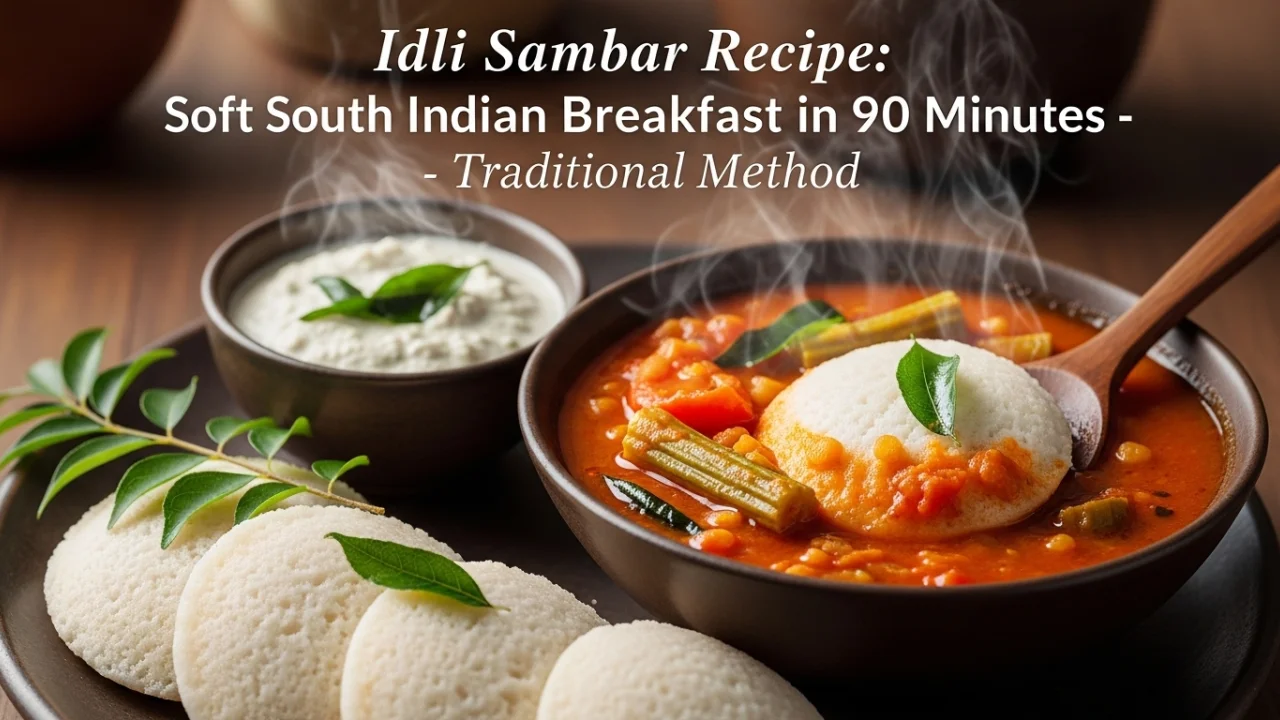
Idli Sambar Recipe: Soft South Indian Breakfast in 90 Minutes – Traditional Method
Published: March 22, 2026 | Category: South Indian Breakfast | Reading Time: 7 minutes
Introduction to Idli Sambar
Idli Sambar represents the quintessential South Indian breakfast combination, featuring steamed rice cakes (idli) served with lentil-based vegetable stew (sambar). This nutritious meal is consumed across India, particularly in Tamil Nadu, Karnataka, Andhra Pradesh, and Kerala, valued for its digestibility, balanced nutrition, and satisfying taste.
The main challenges in preparing idli sambar at home include achieving proper idli batter fermentation for soft texture, preventing idlis from sticking to steamer, creating flavorful sambar with correct consistency, and balancing spices appropriately. Many home versions result in dense, hard idlis or watery, bland sambar.
This recipe addresses these issues through specific techniques: correct rice-to-lentil ratio for batter, proper fermentation conditions, systematic steaming method for idlis, and authentic sambar preparation with appropriate spice balance. Following these approaches ensures restaurant-quality results.
Both components require advance planning for soaking and fermentation, but actual cooking time remains manageable with proper organization.
Recipe Overview
| Parameter | Details |
|---|---|
| Cuisine Type | South Indian |
| Course | Breakfast/Main Course |
| Difficulty Level | Medium |
| Prep Time | 8 hours soaking + fermentation |
| Cook Time | 60 minutes |
| Total Time | 90 minutes active cooking |
| Servings | 4-5 people (20-24 idlis) |
| Calories per Serving | Approx. 280 kcal |
| Dietary | Vegetarian, Vegan, Gluten-free |
| Estimated Cost | $6 – $9 |
Required Ingredients
For Idli Batter:
- Idli rice (parboiled rice) – 2 cups (Substitute: regular rice, though texture differs)
- Urad dal (split black gram) – 1 cup
- Fenugreek seeds (methi) – 1/2 teaspoon
- Salt – 1.5 teaspoons
- Water – for soaking and grinding
- Oil – for greasing idli molds
For Sambar:
- Toor dal (pigeon peas) – 1/2 cup
- Drumsticks – 2, cut into 3-inch pieces
- Carrots – 1 medium, chopped
- Tomatoes – 2 medium, chopped
- Onion – 1 small, chopped (optional, traditional versions skip this)
- Tamarind – lemon-sized ball (Substitute: 2 tablespoons tamarind paste)
Sambar Powder and Spices:
- Sambar powder – 2 tablespoons (store-bought or homemade)
- Turmeric powder – 1/2 teaspoon
- Asafoetida (hing) – 1/4 teaspoon
- Mustard seeds – 1 teaspoon
- Curry leaves – 10-12 leaves
- Dry red chilies – 2
- Oil – 2 tablespoons
- Salt – to taste
For Garnish:
- Fresh coriander leaves – 2 tablespoons, chopped
- Coconut chutney – for serving
- Ghee – for drizzling on idlis (optional)
Kitchen Equipment Needed
- Idli steamer or pressure cooker with idli stand
- Mixer grinder or wet grinder
- Large mixing bowls
- Ladle for pouring batter
- Heavy-bottomed pan for sambar
- Strainer for batter
Step-by-Step Preparation Method
Phase 1: Idli Batter Preparation (Day Before)
Step 1: Soaking Process
Wash idli rice thoroughly 3-4 times until water runs clear. Soak rice in sufficient water (approximately 4 cups) for 6-8 hours or overnight.
In separate bowl, wash urad dal 2-3 times. Add fenugreek seeds to dal. Soak in 2 cups water for 6-8 hours alongside rice.
Fenugreek importance: These seeds aid fermentation and add slight flavor. They make batter fluffy during steaming.
Step 2: Grinding Dal
Drain soaked urad dal completely. Transfer to mixer grinder with minimal water (start with 1/4 cup). Grind on high speed.
Add water gradually, approximately 2 tablespoons at a time. Grind until batter becomes light, fluffy, and increases in volume. The consistency should resemble soft, airy whipped cream.
Grinding time: This takes 15-20 minutes. Proper grinding creates air pockets essential for soft idlis. Under-ground batter produces dense idlis.
Transfer ground dal batter to large mixing bowl.
Step 3: Grinding Rice
Drain soaked rice. Transfer to grinder with minimal water (1/2 cup initially). Grind to slightly coarse paste, not completely smooth.
The rice batter should have slight grainy texture. Over-grinding makes batter too smooth, resulting in dense idlis.
Add ground rice batter to the bowl containing dal batter. Mix both batters thoroughly using hands. Hand mixing incorporates air, improving fermentation.
Step 4: Fermentation
Add 1.5 teaspoons salt to combined batter. Mix well. The batter should be thick yet pourable, coating spoon back.
Cover bowl with lid or cloth. Place in warm location for 8-12 hours for fermentation. In summer, 8 hours suffices. Winter requires 10-12 hours.
Fermentation indicators: Batter will increase in volume by 50-75%, develop slightly sour aroma, and show tiny bubbles on surface.
Phase 2: Idli Steaming
Step 5: Preparing Idli Molds
Grease idli molds lightly with oil using brush or fingers. This prevents sticking.
Gently stir fermented batter once without deflating too much. Pour batter into each mold, filling approximately 3/4 full.
Step 6: Steaming Process
Add 2-3 cups water to idli steamer or pressure cooker. Place idli stand inside once water starts boiling.
Cover and steam for 10-12 minutes on medium heat. If using pressure cooker, don’t use weight/whistle – just cover with lid.
Doneness test: Insert toothpick in center of idli. It should come out clean. Idli surface should appear dry, not wet.
Turn off heat. Wait 2-3 minutes before removing idli stand. This prevents idlis from breaking.
Step 7: Removing Idlis
Run spoon dipped in water around each idli edge. Scoop out gently. Properly cooked idlis will come out easily without sticking.
Phase 3: Sambar Preparation
Step 8: Cooking Dal and Vegetables
Wash toor dal thoroughly. Pressure cook with 2 cups water, turmeric, and few drops oil for 3-4 whistles. Allow pressure to release naturally.
Mash cooked dal lightly using ladle. The consistency should be smooth but not completely liquefied.
Step 9: Tamarind Preparation
Soak tamarind in 1 cup warm water for 15 minutes. Squeeze and extract thick pulp. Strain to remove seeds and fibers.
Step 10: Cooking Vegetables
In heavy-bottomed pan, add 3 cups water. Add drumsticks, carrots, and tomatoes. Cook on medium heat for 10-12 minutes until vegetables become tender.
Add tamarind extract, sambar powder, salt, and asafoetida. Mix well and bring to boil.
Step 11: Adding Dal
Add mashed toor dal to the vegetable mixture. Stir thoroughly. The consistency should be like thin gravy, neither too thick nor too watery.
Simmer on low heat for 5-7 minutes, allowing flavors to blend.
Step 12: Tempering (Tadka)
Heat 2 tablespoons oil in small pan. Add mustard seeds. When they splutter, add curry leaves and dry red chilies.
Pour this tempering over sambar. Mix well. Add chopped coriander leaves.
Simmer for 2 more minutes. Turn off heat.
Professional Techniques and Tips
Technique 1: Dal Grinding for Fluffy Idlis
The urad dal must be ground to light, fluffy consistency with minimal water. This creates air incorporation essential for soft idlis. Professional idli makers grind dal for 20-25 minutes, gradually adding water. The batter should be so light that it almost doubles in volume. Under-ground dal produces dense, hard idlis regardless of fermentation.
Technique 2: Fermentation Temperature Control
Ideal fermentation temperature is 25-30°C (77-86°F). In cold climates, place batter bowl inside oven with light on (not heated), or near warm appliances. In very hot conditions, slightly reduce fermentation time to prevent over-fermentation which makes batter too sour.
Technique 3: Batter Consistency Management
The fermented batter should be thick enough to hold shape when poured but flow smoothly into molds. If too thick, add 2-3 tablespoons water and mix gently. If too thin, unfortunately no fix exists – idlis will be flat. Correct consistency comes from proper rice-dal ratio and controlled water during grinding.
Technique 4: Sambar Balance
Authentic sambar requires balance between tanginess (tamarind), heat (sambar powder), and sweetness (vegetables). The consistency should coat vegetables without being soupy. If too thick, add water and simmer. If too thin, simmer uncovered for additional 5 minutes to reduce.
Common Problems and Solutions
Problem 1: Idlis Turn Out Hard and Dense
Cause: Insufficient dal grinding, poor fermentation, or over-stirring fermented batter.
Solution: For current batch, no remedy exists. For next batch, grind dal until very fluffy, ensure proper fermentation temperature and time, and stir fermented batter minimally.
Prevention: Use wet grinder if available for superior results. Ensure fermentation location is warm. Add fenugreek seeds for better fermentation.
Problem 2: Batter Doesn’t Ferment
Cause: Very cold environment, chlorinated water, or old urad dal.
Solution: Place batter in warmest location in house. Add 1/4 teaspoon sugar to help fermentation. Wait additional 4-6 hours.
Prevention: Use filtered or boiled-cooled water for grinding. Create warm environment for fermentation.
Problem 3: Sambar Too Watery
Cause: Excessive water addition or insufficient dal quantity.
Solution: Simmer uncovered on medium heat for 7-10 minutes until desired consistency achieved.
Prevention: Measure water carefully. Use adequate dal quantity. Simmer appropriately after combining all ingredients.
Problem 4: Sambar Lacks Flavor
Cause: Insufficient sambar powder, missing tamarind, or skipping tempering.
Solution: Add 1 tablespoon additional sambar powder and 1 tablespoon tamarind extract. Simmer for 5 minutes. Ensure tempering is done properly.
Prevention: Use fresh sambar powder. Don’t skip tamarind as it provides essential tangy flavor. Always perform tempering step.
Serving Suggestions
Traditional Service: Serve 3-4 hot idlis per person in individual plates. Pour generous amount of hot sambar over or serve in separate bowl. Accompany with coconut chutney and tomato chutney.
Accompaniments:
- Coconut chutney (essential)
- Red tomato chutney
- Green coriander chutney
- Gunpowder (spicy powder)
- Ghee for drizzling on idlis
Meal Timing: Traditional breakfast dish but also served as dinner or light lunch. Easy to digest, making it suitable for all meals.
Storage and Reheating Instructions
Idli Batter: Refrigerate unused batter in airtight container for 2-3 days. Bring to room temperature before making idlis. Batter continues fermenting slowly in refrigerator.
Cooked Idlis: Store in airtight container at room temperature for 6-8 hours. Refrigerate for up to 2 days. Reheat by steaming for 2-3 minutes or microwave for 30 seconds.
Sambar: Refrigerate in airtight container for 3-4 days. Reheat on stovetop, adding water if too thick. Flavors improve after few hours of resting.
Nutritional Information
Per Serving (4 idlis + 1 cup sambar):
- Calories: 280 kcal
- Protein: 11g
- Carbohydrates: 48g
- Fat: 4g
- Fiber: 6g
- Iron: 3mg (17% DV)
Health Benefits: High protein from lentils. Easily digestible due to fermentation. Probiotic benefits from fermented batter. Low in fat. Good source of complex carbohydrates. Rich in dietary fiber. Suitable for diabetics in moderate portions.
Variations
Rava Idli: Quick version using semolina instead of rice. No fermentation required. Ready in 30 minutes.
Oats Idli: Replace half the rice with oats for higher fiber content.
Mixed Vegetable Sambar: Add beans, potatoes, brinjal, pumpkin for more nutritious version.
Instant Sambar: Use sambar powder and tamarind paste for quicker preparation without compromising much on taste.
Frequently Asked Questions
Q1: Can idli batter be made in regular mixer grinder?
Yes, though wet grinder produces superior results. Mixer grinder requires more water and longer grinding time. Grind dal first until very fluffy, then grind rice separately. Mix both and ferment. Results are acceptable though texture may not match wet grinder version.
Q2: Why do idlis stick to molds?
Insufficient greasing is primary cause. Also occurs when batter is too thin or idlis removed immediately after steaming. Always grease molds well, use proper batter consistency, and wait 2-3 minutes after cooking before removing.
Q3: Can sambar be made without sambar powder?
Yes, using individual spices. Dry roast 2 tablespoons coriander seeds, 1 tablespoon chana dal, 1 teaspoon cumin seeds, 4-5 dry red chilies, 1/2 teaspoon fenugreek seeds. Grind to powder. Use this fresh powder for authentic taste.
Q4: How to make idlis softer?
Ensure proper dal grinding until very fluffy. Add fenugreek seeds for better fermentation. Don’t over-stir fermented batter. Steam on medium heat for correct duration. Use idli rice variety rather than regular rice if available.
Conclusion
Idli Sambar preparation requires advance planning for soaking and fermentation but rewards with nutritious, delicious results. Success depends on proper batter preparation through adequate grinding and fermentation, combined with balanced sambar seasoning.
The fermented batter and lentil-based sambar create complete protein meal suitable for all ages. This combination represents balanced nutrition with carbohydrates from rice, protein from lentils, and vitamins from vegetables.
Mastering idli sambar provides foundation for South Indian cooking and offers healthy breakfast option that can be prepared regularly with practice and proper technique.