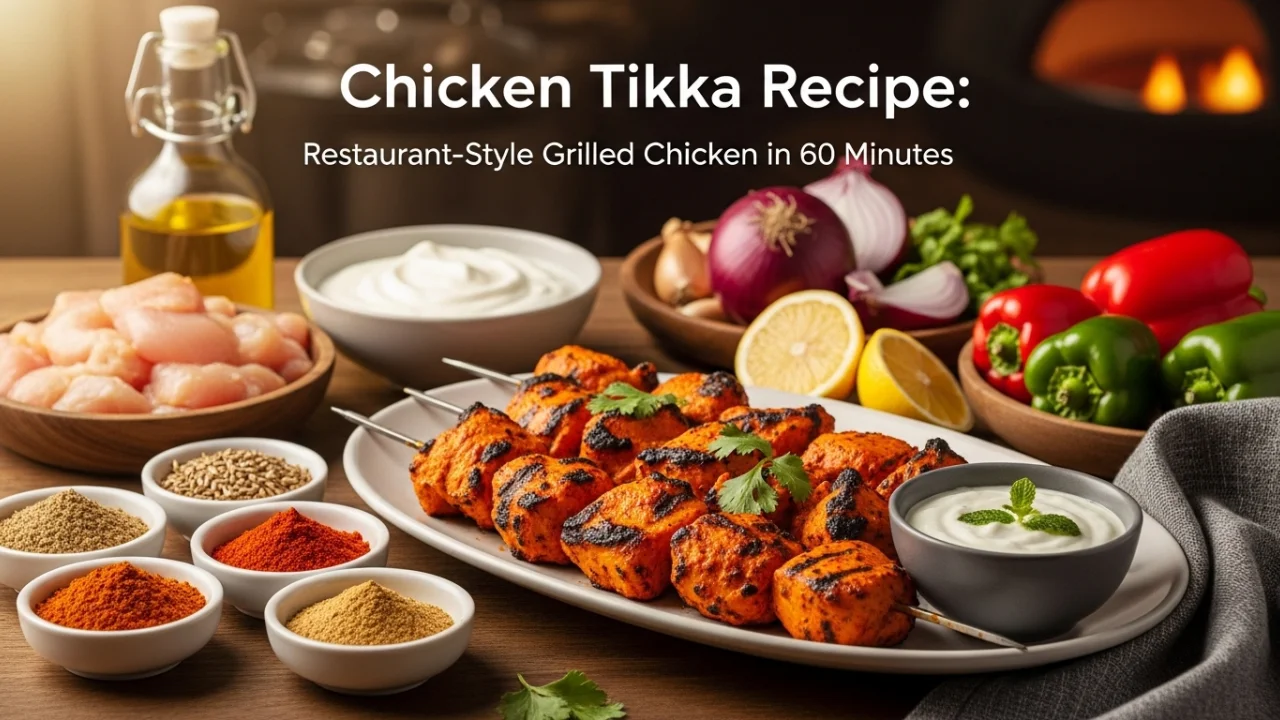
Chicken Tikka Recipe: Restaurant-Style Grilled Chicken in 60 Minutes
Published: March 22, 2026 | Category: Indian Non-Vegetarian | Reading Time: 6 minutes
Introduction to Chicken Tikka
Chicken Tikka stands as one of the most popular Indian appetizers, featuring marinated chicken pieces grilled to perfection with smoky, charred exterior and juicy interior. This dish originated in Punjab and has become staple at restaurants worldwide, valued for its bold flavors, tender texture, and versatility as starter or main course.
The main challenges in preparing chicken tikka at home include achieving proper marinade penetration, preventing chicken from drying during cooking, creating authentic smoky flavor without tandoor, and getting characteristic charred marks. Many home versions result in either dry, flavorless chicken or overly soft pieces lacking the signature texture.
This recipe addresses these issues through specific techniques: two-stage marination process, correct yogurt-to-spice ratio, proper cooking temperature control, and smoking method for tandoor-like flavor. Following these approaches ensures restaurant-quality results with tender, flavorful chicken.
While traditional preparation uses tandoor (clay oven), this recipe provides methods for oven, grill, and stovetop, making it accessible for home cooking.
Recipe Overview
| Parameter | Details |
|---|---|
| Cuisine Type | Indian (Punjabi) |
| Course | Appetizer/Main Course |
| Difficulty Level | Easy to Medium |
| Prep Time | 20 minutes + 4 hours marination |
| Cook Time | 20-25 minutes |
| Total Time | 60 minutes active |
| Servings | 4-5 people |
| Calories per Serving | Approx. 320 kcal |
| Dietary | Non-Vegetarian, High Protein |
| Estimated Cost | $8 – $12 |
Required Ingredients
For Chicken:
- Boneless chicken – 750 grams, cut into 1.5-inch cubes
- Lemon juice – 2 tablespoons
- Salt – 1 teaspoon
- Ginger-garlic paste – 2 tablespoons
First Marination (Tenderizing):
- Hung curd (thick yogurt) – 1/2 cup
- Kasuri methi (dried fenugreek) – 1 tablespoon, crushed
- Garam masala – 1 teaspoon
- Red chili powder – 1 teaspoon
- Turmeric powder – 1/4 teaspoon
- Coriander powder – 1 teaspoon
- Cumin powder – 1/2 teaspoon
Second Marination (Flavor):
- Thick cream – 3 tablespoons
- Mustard oil – 2 tablespoons (Substitute: refined oil)
- Gram flour (besan) – 1 tablespoon
- Chaat masala – 1 teaspoon
- Black pepper powder – 1/2 teaspoon
For Basting:
- Melted butter – 3 tablespoons
- Oil – for greasing
For Smoking (Optional but Recommended):
- Charcoal piece – 1 small
- Ghee – 1 teaspoon
- Aluminum foil bowl – small
Kitchen Equipment Needed
- Large mixing bowl
- Bamboo or metal skewers
- Oven, grill, or tandoor
- Basting brush
- Kitchen tongs
- Serving platter
Step-by-Step Preparation Method
Phase 1: Chicken Preparation
Step 1: Cleaning and Cutting
Wash chicken pieces thoroughly under running water. Pat dry completely using paper towels or clean cloth. Excess moisture prevents marinade from adhering properly.
Cut boneless chicken breast or thigh into uniform 1.5-inch cubes. Uniform size ensures even cooking. Larger pieces remain undercooked while smaller ones dry out.
Step 2: Initial Tenderizing
Place chicken pieces in large mixing bowl. Add lemon juice, salt, and ginger-garlic paste. Mix thoroughly, ensuring each piece is coated.
Let this sit for 15-20 minutes at room temperature. The acid from lemon and enzymes from ginger begin tenderizing meat and removing raw chicken smell.
Phase 2: Two-Stage Marination
Step 3: First Marination
After initial tenderizing, add hung curd, kasuri methi, garam masala, red chili powder, turmeric powder, coriander powder, and cumin powder to the chicken.
Mix thoroughly using hands. Hand mixing ensures spices coat every surface. Refrigerate for minimum 2 hours, ideally 4-6 hours.
Marination importance: This stage allows spices to penetrate chicken fibers, developing deep flavor throughout meat rather than just surface seasoning.
Step 4: Second Marination
After first marination, add thick cream, mustard oil, gram flour, chaat masala, and black pepper powder. Mix gently but thoroughly.
The gram flour creates coating that helps retain moisture during high-heat cooking. Cream adds richness and prevents drying. Oil carries fat-soluble flavors.
Refrigerate for additional 1-2 hours. Total marination time should be minimum 4 hours, maximum overnight (12 hours).
Temperature note: Bring marinated chicken to room temperature 30 minutes before cooking. Cold chicken doesn’t cook evenly.
Phase 3: Skewering and Cooking
Step 5: Threading on Skewers
If using bamboo skewers, soak in water for 30 minutes to prevent burning during cooking.
Thread marinated chicken pieces onto skewers, leaving small gap between each piece. Don’t pack tightly – spaces allow heat circulation and even cooking.
Thread 5-6 pieces per skewer depending on length. Reserve excess marinade for basting.
Step 6: Cooking Methods
Method A: Oven Cooking (Most Common)
Preheat oven to 220°C (425°F). Line baking tray with aluminum foil and place wire rack on top. Grease rack with oil.
Place skewers on rack. Bake for 12-15 minutes. Remove, baste with melted butter, flip skewers, and bake another 8-10 minutes.
Method B: Grill Cooking
Preheat grill to high heat. Oil the grill grates well to prevent sticking.
Place skewers on grill. Cook for 6-7 minutes per side, basting with butter between flips. Total cooking time 12-15 minutes.
Method C: Stovetop (Tawa/Griddle)
Heat heavy griddle or tawa over high heat. Add small amount of oil.
Place chicken pieces (can remove from skewers) on hot surface. Cook for 5-6 minutes per side, turning occasionally until charred marks appear.
Doneness check: Chicken is cooked when internal temperature reaches 75°C (165°F) or juices run clear when pierced.
Step 7: Smoking Process (Optional)
This step provides authentic tandoor-like smoky flavor.
After cooking, transfer chicken tikka to deep bowl or pan. Create small bowl from aluminum foil and place in center among chicken pieces.
Heat small charcoal piece on direct flame until red hot. Using tongs, place hot charcoal in foil bowl. Immediately add 1 teaspoon ghee over charcoal.
Cover entire bowl tightly with lid. The ghee will smoke intensely. Let sit covered for 3-4 minutes. Remove charcoal before serving.
Safety note: Ensure adequate ventilation. The smoking creates strong aroma and visible smoke.
Phase 4: Final Touches
Step 8: Finishing
Remove chicken tikka from skewers onto serving platter. Drizzle with remaining melted butter.
Sprinkle chaat masala and freshly ground black pepper over hot chicken. Squeeze fresh lemon juice.
Garnish with sliced onions, lemon wedges, and fresh coriander leaves.
Professional Techniques and Tips
Technique 1: Hung Curd Preparation
Hang regular yogurt in muslin cloth for 2-3 hours to remove excess whey. This creates thick, concentrated yogurt that adheres better to chicken and doesn’t make marinade watery. Store-bought Greek yogurt works as substitute but traditional hung curd provides superior results.
Technique 2: Kasuri Methi Enhancement
Crush dried fenugreek leaves between palms before adding to marinade. This releases essential oils and aromatic compounds. Kasuri methi adds characteristic restaurant-style flavor that distinguishes professional tikka from home versions. Don’t skip this ingredient.
Technique 3: High-Heat Cooking
Chicken tikka requires high temperature (220°C+) for characteristic charred exterior while keeping interior juicy. Lower temperatures dry out chicken before developing proper color. The high heat creates Maillard reaction producing complex flavors and appealing appearance.
Technique 4: Basting for Moisture
Regular basting with melted butter during cooking prevents surface from drying. The butter also adds flavor and promotes browning. Baste at least twice during cooking process for best results.
Common Problems and Solutions
Problem 1: Dry, Tough Chicken
Cause: Overcooking, insufficient marination time, or using chicken breast without proper fat content.
Solution: For current batch, no remedy. For next preparation, marinate minimum 4 hours, don’t exceed cooking time, and consider using chicken thigh which has higher fat content staying moister.
Prevention: Monitor cooking time carefully. Use meat thermometer to check doneness at 75°C internal temperature. Don’t cook beyond this point.
Problem 2: Marinade Doesn’t Stick
Cause: Excess moisture on chicken, watery yogurt, or insufficient gram flour.
Solution: Pat chicken completely dry before marinating. Use hung curd or Greek yogurt. Add extra tablespoon gram flour to thicken marinade.
Prevention: Always dry chicken thoroughly. Prepare hung curd by draining regular yogurt. Ensure marinade has coating consistency.
Problem 3: Lacks Smoky Flavor
Cause: Skipping smoking step or insufficient heat during cooking.
Solution: Perform charcoal smoking as described in Step 7. Alternatively, add 1/4 teaspoon liquid smoke to marinade.
Prevention: Cook at high temperature for charring. Include smoking step for authentic tandoor taste.
Problem 4: Chicken Sticks to Skewers or Grill
Cause: Insufficient oil on skewers/grill or marinade too thick.
Solution: Oil skewers well before threading. If already stuck, gently twist while pulling.
Prevention: Grease all cooking surfaces adequately. Ensure marinade contains sufficient oil (2 tablespoons minimum).
Serving Suggestions
Traditional Service: Serve hot chicken tikka on wooden platter or sizzler plate. Accompany with mint-coriander chutney, sliced onions, and lemon wedges.
Accompaniments:
- Mint chutney (essential)
- Green salad with lemon dressing
- Pickled onions
- Roomali roti or naan
- Laccha onions (thinly sliced onions soaked in vinegar)
As Main Course: Serve with naan, jeera rice, or pulao along with dal makhani for complete meal.
As Appetizer: Present on cocktail picks with chutney for dipping at parties or gatherings.
Beverage Pairing: Pairs well with cold beer, lassi, fresh lime soda, or masala chai.
Storage and Reheating
Marinated Raw Chicken: Can be refrigerated for up to 24 hours before cooking. Freezes well for up to 1 month. Thaw in refrigerator overnight before cooking.
Cooked Tikka: Store in airtight container in refrigerator for 2-3 days. Not recommended for freezing as texture deteriorates.
Reheating: Microwave for 1-2 minutes or reheat in oven at 180°C for 5-7 minutes. Add few drops of water to prevent drying. Best consumed fresh.
Nutritional Information
Per Serving (approximately 150g):
- Calories: 320 kcal
- Protein: 38g
- Carbohydrates: 6g
- Fat: 16g
- Fiber: 1g
- Sodium: 480mg
Health Benefits: Excellent protein source for muscle building. Yogurt marinade provides probiotics. Spices offer anti-inflammatory properties. Grilling method reduces fat compared to frying.
Variations
Malai Tikka: Increase cream to 1/2 cup, add 2 tablespoons cheese, reduce red chili for milder, creamier version.
Achari Tikka: Add 2 tablespoons pickle masala to marinade for tangy, spicy variation.
Hariyali Tikka: Add 1/2 cup mint-coriander paste to marinade for green-colored, herbaceous version.
Reshmi Tikka: Use only cream and mild spices, skip red chili for soft, white appearance.
Frequently Asked Questions
Q1: Can chicken tikka be made without yogurt?
Yes, though yogurt is traditional and provides tenderizing acids plus creamy base. Substitute with 1/2 cup thick coconut cream or cashew paste mixed with 2 tablespoons lemon juice. Texture and flavor will differ but results remain acceptable.
Q2: What’s difference between chicken tikka and chicken tandoori?
Chicken tikka uses boneless pieces and richer marinade with cream. Tandoori chicken uses bone-in pieces with simpler yogurt-spice marinade and red color. Tikka is typically served as appetizer while tandoori is main course.
Q3: How to achieve restaurant-style red color?
Traditional method uses Kashmiri red chili powder which provides color without excessive heat. Some restaurants add red food color – use sparingly (few drops) if desired. Natural alternative is beetroot powder or paprika for color.
Q4: Can this be made in air fryer?
Yes, air fryer works excellently. Preheat to 200°C. Cook chicken pieces for 12-15 minutes, shaking basket halfway through. Brush with butter during cooking. Results are healthier with less oil while maintaining texture.
Conclusion
Chicken Tikka preparation requires attention to marination process, proper spice balance, and correct cooking temperature. The two-stage marination and high-heat cooking produce restaurant-quality results with tender, flavorful chicken featuring characteristic charred exterior.
Success depends primarily on adequate marination time allowing spices to penetrate meat, using hung curd for proper coating consistency, and cooking at high temperature for Maillard reaction. These factors create the signature taste and texture distinguishing excellent tikka from mediocre versions.
This versatile dish serves multiple purposes – from party appetizer to main course component, making it valuable addition to any cook’s repertoire. Once basic technique is mastered, numerous variations become possible through different spice combinations.