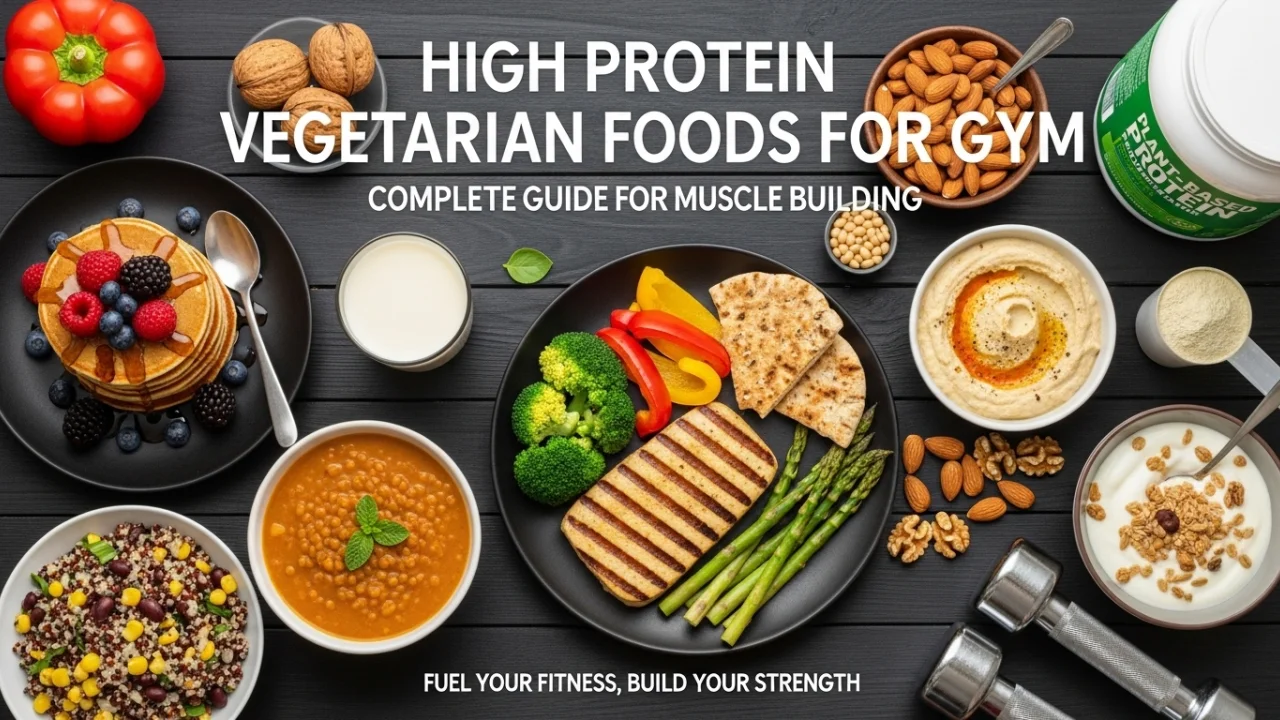
High Protein Vegetarian Foods for Gym: Complete Guide for Muscle Building
Published: March 22, 2026 | Category: Fitness & Nutrition | Reading Time: 7 minutes
Introduction to Vegetarian Protein for Muscle Building
Building muscle on a vegetarian diet presents unique challenges for gym-goers, primarily centered around meeting daily protein requirements without meat, fish, or eggs. Many vegetarian athletes struggle to consume adequate protein for muscle recovery, growth, and strength gains while maintaining calorie control.
The main challenges include identifying high-quality vegetarian protein sources, consuming sufficient quantity without excessive calories, ensuring complete amino acid profiles, timing protein intake around workouts, and creating affordable, sustainable meal plans. Many vegetarian gym-goers fail to see desired muscle gains due to inadequate protein consumption or poor protein quality.
This comprehensive guide addresses these issues through specific strategies: identifying top vegetarian protein sources with complete nutritional profiles, calculating individual protein requirements, creating effective meal timing protocols, and providing practical meal combinations. Following these approaches ensures optimal muscle building results on vegetarian diet.
Proper protein intake combined with resistance training produces muscle growth comparable to non-vegetarian diets when planned systematically.
Nutritional Overview
| Parameter | Details |
|---|---|
| Target Audience | Vegetarian Gym-Goers, Athletes |
| Daily Protein Need | 1.6-2.2g per kg body weight |
| Protein Sources | 15+ High-Quality Options |
| Meal Frequency | 4-6 meals per day |
| Cost Range | $50-$80 per week |
| Difficulty Level | Easy to Medium |
| Results Timeline | 4-8 weeks visible gains |
| Calorie Range | 2000-3500 kcal (based on goals) |
| Dietary Type | Lacto-Vegetarian friendly |
| Supplement Need | Optional but beneficial |
Complete High-Protein Vegetarian Food List
Dairy-Based Protein Sources (Highest Bioavailability):
- Paneer (Indian Cottage Cheese) – 18g protein per 100g
- Best for: Muscle building, post-workout meals
- Preparation: Grilled, curry, scrambled
- Daily serving: 150-200g (27-36g protein)
- Greek Yogurt – 10g protein per 100g
- Best for: Pre-workout, breakfast
- Preparation: Plain, with fruits, protein smoothies
- Daily serving: 200g (20g protein)
- Milk (Full-fat) – 3.5g protein per 100ml
- Best for: Post-workout shake base
- Preparation: Plain, protein shake, smoothies
- Daily serving: 500ml (17.5g protein)
- Cheese (Low-fat) – 25g protein per 100g
- Best for: Snacks, sandwiches
- Preparation: Raw, grilled, melted
- Daily serving: 50g (12.5g protein)
- Whey Protein Powder – 24-30g protein per scoop (30g)
- Best for: Post-workout, convenient protein boost
- Preparation: Shake with milk/water
- Daily serving: 1-2 scoops (24-60g protein)
Legume and Lentil Sources (Plant-Based Complete):
- Moong Dal (Green Gram) – 24g protein per 100g (dry)
- Best for: Any meal, easy digestion
- Preparation: Boiled, dal, sprouts
- Daily serving: 100g cooked (8g protein)
- Chana (Chickpeas) – 19g protein per 100g (cooked)
- Best for: Lunch, dinner, snacks
- Preparation: Curry, roasted, salad
- Daily serving: 150g (28.5g protein)
- Rajma (Kidney Beans) – 9g protein per 100g (cooked)
- Best for: Post-workout meal
- Preparation: Curry with rice
- Daily serving: 200g (18g protein)
- Black Chana – 20g protein per 100g
- Best for: Evening snack, salad
- Preparation: Boiled, roasted
- Daily serving: 100g (20g protein)
- Masoor Dal (Red Lentils) – 25g protein per 100g (dry)
- Best for: Dinner, easy to digest
- Preparation: Dal, soup
- Daily serving: 100g cooked (9g protein)
Soy-Based Protein (Highest Plant Protein):
- Soya Chunks – 52g protein per 100g
- Best for: Muscle building, meat alternative
- Preparation: Curry, dry preparation
- Daily serving: 50g (26g protein)
- Tofu – 8g protein per 100g
- Best for: Any meal, versatile
- Preparation: Grilled, scrambled, curry
- Daily serving: 200g (16g protein)
- Soy Milk – 3.3g protein per 100ml
- Best for: Lactose-intolerant individuals
- Preparation: Direct consumption, smoothies
- Daily serving: 250ml (8.25g protein)
Nuts and Seeds (Healthy Fats + Protein):
- Peanuts – 26g protein per 100g
- Best for: Snacks, peanut butter
- Preparation: Roasted, butter
- Daily serving: 30g (7.8g protein)
- Almonds – 21g protein per 100g
- Best for: Morning snack
- Preparation: Soaked, roasted
- Daily serving: 30g (6.3g protein)
- Pumpkin Seeds – 19g protein per 100g
- Best for: Snacking, salad topping
- Preparation: Roasted
- Daily serving: 30g (5.7g protein)
- Chia Seeds – 17g protein per 100g
- Best for: Breakfast, smoothies
- Preparation: Soaked, pudding
- Daily serving: 30g (5.1g protein)
Grain-Based Protein:
- Quinoa – 4.4g protein per 100g (cooked)
- Best for: Complete protein source
- Preparation: Salad, upma, khichdi
- Daily serving: 200g (8.8g protein)
- Oats – 13g protein per 100g
- Best for: Breakfast, pre-workout
- Preparation: Porridge, smoothies
- Daily serving: 100g (13g protein)
Daily Protein Requirement Calculator
Formula for Muscle Building:
Body Weight (kg) × 1.6 to 2.2 = Daily Protein (grams)
Examples:
60 kg gym-goer:
- Minimum: 60 × 1.6 = 96g protein/day
- Optimal: 60 × 2.0 = 120g protein/day
- Maximum: 60 × 2.2 = 132g protein/day
70 kg gym-goer:
- Minimum: 70 × 1.6 = 112g protein/day
- Optimal: 70 × 2.0 = 140g protein/day
- Maximum: 70 × 2.2 = 154g protein/day
80 kg gym-goer:
- Minimum: 80 × 1.6 = 128g protein/day
- Optimal: 80 × 2.0 = 160g protein/day
- Maximum: 80 × 2.2 = 176g protein/day
Sample High-Protein Meal Plans
Plan 1: 120g Protein Day (60-65kg individual)
Meal 1 – Early Morning (6:00 AM):
- 4 soaked almonds + 2 walnuts
- 1 glass warm water
- Protein: 3g
Meal 2 – Breakfast (8:00 AM):
- 100g oats cooked in 250ml milk
- 1 banana
- 1 scoop whey protein
- Protein: 43g
Meal 3 – Mid-Morning (11:00 AM):
- 200g Greek yogurt
- 1 tablespoon peanut butter
- Protein: 25g
Meal 4 – Lunch (1:30 PM):
- 3 chapatis (wheat)
- 150g paneer curry
- 100g cooked chana
- Salad
- Protein: 45g
Meal 5 – Pre-Workout (4:00 PM):
- 1 banana
- Handful of peanuts (30g)
- Protein: 9g
Meal 6 – Post-Workout (6:30 PM):
- 1 scoop whey protein with 300ml milk
- Protein: 35g
Meal 7 – Dinner (8:30 PM):
- 2 chapatis
- 100g moong dal
- 100g mixed vegetables
- Protein: 15g
Total: 175g protein, 2400 calories
Plan 2: 140g Protein Day (70-75kg individual)
Breakfast: 100g oats + 1 scoop protein + 250ml milk = 43g
Mid-Morning: 150g paneer bhurji = 27g
Lunch: 4 chapatis + 200g rajma + curd = 35g
Evening: Protein shake + banana = 30g
Dinner: 3 chapatis + 100g dal + tofu curry (150g) = 25g
Before Bed: 200ml milk + 4 almonds = 10g
Total: 170g protein, 2800 calories
Meal Timing for Optimal Muscle Growth
Pre-Workout Nutrition (1-2 hours before):
Focus: Quick-digesting carbs + moderate protein
Best options:
- Banana + peanut butter
- Oats with milk
- Greek yogurt with honey
Protein target: 15-20g
Post-Workout Nutrition (within 30-60 minutes):
Focus: Fast-absorbing protein + simple carbs
Best options:
- Whey protein shake with banana
- Paneer sandwich
- Protein smoothie with fruits
Protein target: 25-40g
Before Bed:
Focus: Slow-digesting protein
Best options:
- Paneer (100g)
- Greek yogurt (200g)
- Casein protein shake
Protein target: 20-30g
Protein Absorption Tips
Tip 1: Distribute Protein Throughout Day
Body can only absorb 25-40g protein per meal efficiently. Consuming 150g protein in 2 meals is less effective than distributing across 5-6 meals. Space protein intake every 3-4 hours for optimal muscle protein synthesis.
Tip 2: Combine Incomplete Proteins
Rice + Dal creates complete amino acid profile. Wheat + Chana provides all essential amino acids. Combining different plant proteins ensures all nine essential amino acids for muscle building.
Tip 3: Add Vitamin C for Iron Absorption
Vegetarian protein sources contain iron in non-heme form. Adding lemon juice, tomatoes, or citrus fruits improves iron absorption by 3-4 times, preventing anemia during intense training.
Tip 4: Soak Legumes and Nuts
Soaking overnight removes phytic acid and enzyme inhibitors, increasing protein bioavailability by 20-30%. Soak almonds, chickpeas, and lentils for better digestion and absorption.
Budget-Friendly High-Protein Shopping List
Weekly Essentials (₹1500-2000/$20-27):
- Moong dal: 1kg (₹150)
- Chana: 1kg (₹100)
- Peanuts: 500g (₹100)
- Milk: 7 liters (₹350)
- Paneer: 500g (₹300)
- Greek yogurt: 1kg (₹250)
- Soya chunks: 500g (₹80)
- Oats: 1kg (₹200)
- Whey protein: 1kg (₹2500 one-time)
Cost per day: ₹250-300 ($3.5-4)
Common Mistakes to Avoid
Mistake 1: Relying Only on Dal
While dal is excellent protein source, depending solely on it creates incomplete amino acid profile. Combine with dairy, soy, or complementary grains for complete protein.
Mistake 2: Ignoring Protein Timing
Consuming all protein in 1-2 large meals reduces muscle protein synthesis. Distribute protein across 4-6 meals for constant amino acid supply to muscles.
Mistake 3: Overcooking Protein
High-temperature cooking (especially frying at high heat) denatures proteins, reducing bioavailability. Steam, boil, or grill at moderate temperatures for better protein retention.
Mistake 4: Not Tracking Intake
Most vegetarian gym-goers underestimate protein needs. Track daily intake using apps or food diary for first 2-3 weeks to ensure adequate consumption.
Supplement Recommendations
Essential Supplements:
Whey Protein Isolate:
- Dosage: 1-2 scoops daily
- Timing: Post-workout, between meals
- Brand options: Optimum Nutrition, MyProtein, MuscleBlaze
BCAA (Branched-Chain Amino Acids):
- Dosage: 5-10g during workout
- Benefit: Prevents muscle breakdown
- Best for: Intense training sessions
Creatine Monohydrate:
- Dosage: 3-5g daily
- Benefit: Increases strength and muscle mass
- Budget-friendly and effective
Optional Supplements:
Vitamin B12:
- Essential for vegetarians
- Dosage: 500-1000mcg daily
- Prevents deficiency-related fatigue
Omega-3 (Algae-based):
- Dosage: 1000mg EPA+DHA daily
- Benefit: Reduces inflammation, aids recovery
Frequently Asked Questions
Q1: Can vegetarians build muscle as effectively as non-vegetarians?
Yes, research shows vegetarians can build equal muscle mass when consuming adequate protein (1.6-2.2g/kg body weight) from diverse sources. The key is ensuring complete amino acid profile through food combinations and meeting total protein requirements consistently.
Q2: Is whey protein necessary for vegetarian muscle building?
Not necessary but highly convenient. Whole food sources like paneer, dal, and soy provide sufficient protein. However, whey protein offers quick absorption, convenience, and cost-effectiveness, making it beneficial for busy individuals or those struggling to meet protein targets through food alone.
Q3: How much protein can body absorb per meal?
Research indicates 25-40g protein per meal optimizes muscle protein synthesis. Consuming more isn’t harmful but doesn’t provide additional muscle-building benefits. Distribute remaining protein across other meals rather than exceeding 40g in single sitting.
Q4: What are best protein sources for lactose-intolerant individuals?
Soy products (tofu, soya chunks, soy milk), legumes (chana, rajma, moong dal), nuts, seeds, and plant-based protein powders (pea, rice, hemp protein) provide excellent alternatives. Lactose-free whey isolate is also available for those wanting dairy-based protein without lactose.
Conclusion
Building muscle on vegetarian diet requires strategic protein selection, proper meal timing, and consistent intake meeting individual requirements. The diverse range of high-quality vegetarian protein sources makes muscle building entirely achievable without animal products.
Success depends on consuming 1.6-2.2g protein per kilogram body weight daily, distributing intake across 4-6 meals, combining complementary proteins for complete amino acid profiles, and timing protein around workouts. These factors produce muscle gains comparable to non-vegetarian diets.
With proper planning, vegetarian gym-goers can meet all nutritional requirements, build substantial muscle mass, and maintain optimal health while adhering to dietary preferences. The key is knowledge, consistency, and systematic approach to nutrition.