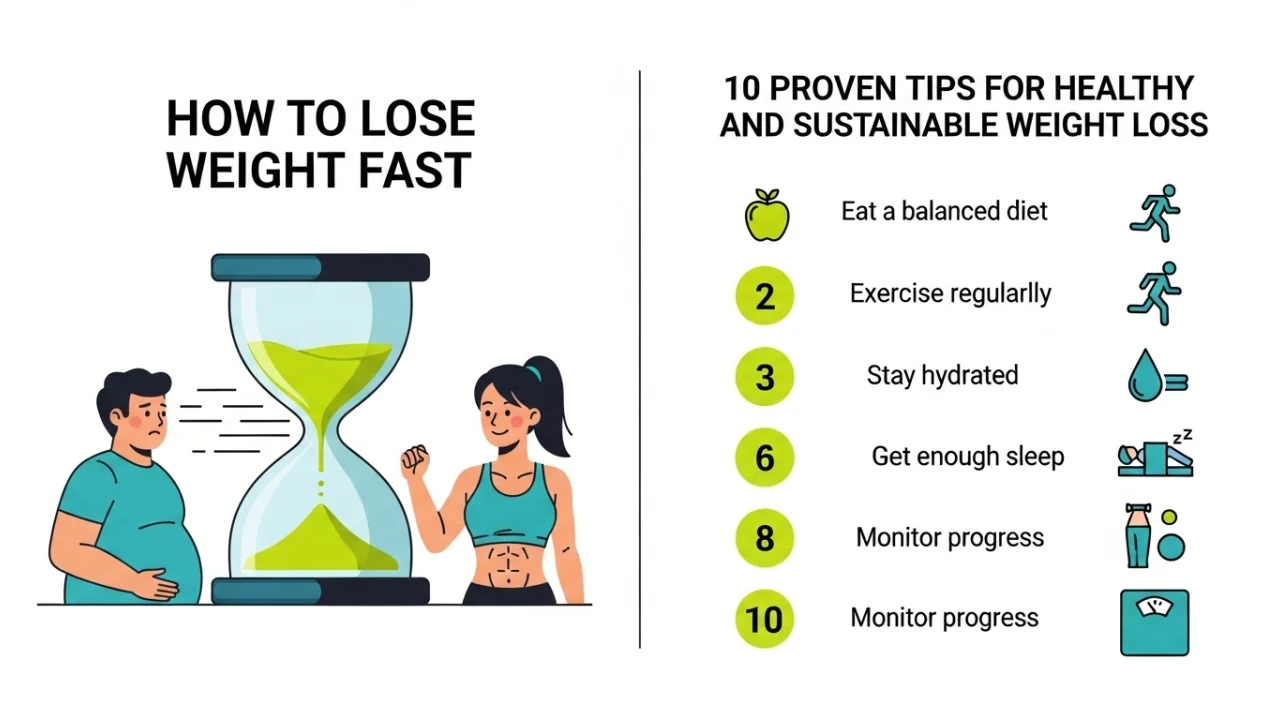
How to lose weight fast – 10 Proven Tips for Healthy and Sustainable Weight Loss
Weight loss is one of the most common health goals, yet it often feels overwhelming with so much conflicting advice. The truth is, losing weight is not about extreme diets or exhausting workouts—it’s about making consistent, sustainable changes that fit into your daily life. Whether you want to shed a few kilos or make a major transformation, the principles remain the same: eat mindfully, move regularly, and build habits that support long-term health.
This guide breaks down the most effective, science-backed strategies to lose weight in a healthy way. It also highlights common mistakes to avoid, practical meal ideas, and answers to frequently asked questions. Follow these steps, and you’ll be on your way to reaching your goals without crash diets or frustration.
Why Sustainable Weight Loss Matters
Quick-fix diets often lead to rapid water loss and muscle loss, not fat loss. When you lose weight too fast, you’re more likely to regain it—sometimes even more than you lost. Sustainable weight loss focuses on gradual fat reduction, preserving muscle, and building habits you can maintain for life. Aim for losing 0.5–1 kg per week for steady, long-term results.
Key Principles for Healthy Weight Loss
| Principle | Why It Works |
|---|---|
| Calorie deficit | You must burn more calories than you consume to lose weight. |
| Protein-rich diet | Protein keeps you full, preserves muscle, and boosts metabolism. |
| Regular physical activity | Burns calories, improves mood, and supports overall health. |
| Quality sleep | Poor sleep increases hunger hormones and cravings. |
| Consistency | Small daily habits matter more than intense but short-lived efforts. |
10 Proven Tips to Lose Weight
1. Create a Moderate Calorie Deficit
To lose weight, you need to consume fewer calories than your body burns. A deficit of 300–500 calories per day typically leads to a loss of about 0.5 kg per week. You can create this deficit by reducing portion sizes, cutting out liquid calories (sugary drinks, alcohol), and increasing physical activity. Avoid extreme deficits (below 1200 calories for women, 1500 for men) as they can slow metabolism and cause nutrient deficiencies.
2. Eat More Protein and Fiber
Protein and fiber are the two most important nutrients for weight loss. Protein increases satiety, reduces cravings, and helps preserve muscle during calorie restriction. Good sources include eggs, chicken, fish, tofu, lentils, and Greek yogurt. Fiber-rich foods like vegetables, fruits, whole grains, and legumes add bulk to meals, keeping you full longer without adding many calories.
3. Drink Plenty of Water
Drinking water before meals can reduce calorie intake. Water also supports metabolism and helps your body burn fat more efficiently. Aim for 8–10 glasses a day. Replace sugary sodas, fruit juices, and sweetened coffees with water, unsweetened tea, or infused water with lemon or cucumber.
4. Reduce Processed Foods and Added Sugar
Processed foods are often high in calories, low in nutrients, and designed to be hyper-palatable, making it easy to overeat. Cut back on packaged snacks, sugary cereals, fast food, and sugary drinks. Instead, focus on whole, single-ingredient foods. When you do eat sweets, have them in small portions and as occasional treats.
5. Add Strength Training
Cardio is great for burning calories, but strength training (weight lifting, bodyweight exercises) builds muscle. Muscle burns more calories at rest than fat, so increasing your muscle mass raises your resting metabolic rate. Aim for at least two strength sessions per week, targeting major muscle groups.
6. Move More Throughout the Day
Exercise is important, but non-exercise activity (walking, taking stairs, standing) also contributes significantly to calorie burn. Try to get at least 7,000–10,000 steps daily. Even short 10-minute walks after meals can help lower blood sugar and aid digestion.
7. Get Enough Sleep
Sleep deprivation disrupts hunger hormones—ghrelin (which stimulates appetite) increases, while leptin (which signals fullness) decreases. Lack of sleep also increases cravings for high-calorie, sugary foods. Aim for 7–9 hours of quality sleep each night. Create a consistent bedtime routine and avoid screens before bed.
8. Manage Stress
Chronic stress triggers the release of cortisol, a hormone that encourages fat storage, especially around the belly. Stress also often leads to emotional eating. Incorporate stress-reducing practices like walking, meditation, deep breathing, or hobbies that relax you.
9. Practice Mindful Eating
Mindful eating means paying attention to what you eat, savoring each bite, and listening to your body’s hunger and fullness cues. Avoid eating while distracted (watching TV, scrolling on your phone). Slow down, chew thoroughly, and stop when you are about 80% full. This simple habit can significantly reduce overeating.
10. Track Progress Without Obsessing
Weigh yourself once a week at the same time, but don’t rely solely on the scale. Take measurements, notice how your clothes fit, and track how you feel—more energy, better sleep, improved mood. These non-scale victories are often more important than the number on the scale.
Simple Meal Ideas for Weight Loss
| Meal | Options |
|---|---|
| Breakfast | Oats with berries and nuts; Greek yogurt with fruit; scrambled eggs with spinach and whole-wheat toast |
| Lunch | Grilled chicken salad with mixed greens; lentil soup with a small whole-grain roll; tofu stir-fry with vegetables |
| Snack | Apple slices with peanut butter; handful of almonds; carrot sticks with hummus |
| Dinner | Baked fish with roasted broccoli and quinoa; vegetable curry with brown rice; turkey meatballs with zucchini noodles |
Common Weight Loss Mistakes to Avoid
| Mistake | Why It Backfires |
|---|---|
| Skipping meals | Leads to extreme hunger and overeating later; slows metabolism |
| Cutting out all carbs or fats | Eliminates essential nutrients; often unsustainable |
| Overdoing cardio only | May lead to muscle loss, which slows metabolism over time |
| Relying on “detox” or “cleanse” diets | Temporary water loss, not fat loss; can cause nutrient deficiencies |
| Not eating enough protein | Causes muscle loss and increases hunger |
| Obsessing over the scale | Daily fluctuations can be discouraging; focus on long-term trends |
Frequently Asked Questions (FAQS)
How fast can I lose weight safely?
A safe rate is 0.5–1 kg per week. Faster loss often means losing water and muscle, which is not sustainable.
Do I need to exercise to lose weight?
You can lose weight through diet alone, but exercise helps preserve muscle, improves mood, and makes it easier to maintain the loss. A combination of diet and exercise is most effective.
What’s the best diet for weight loss?
The best diet is one you can stick with. Focus on whole foods, adequate protein, fiber, and a moderate calorie deficit. There’s no single “magic” diet.
Can I lose weight without counting calories?
Yes. Focus on portion control, eating slowly, and filling half your plate with vegetables. Many people find that mindful eating and avoiding processed foods naturally leads to a calorie deficit.
Why am I not losing weight even though I’m eating healthy?
Possible reasons: hidden calories (oils, sauces, drinks), not eating enough protein, not moving enough, stress, poor sleep, or an underlying medical condition. Keep a food diary for a week to identify where extra calories may be hiding.
What are the best exercises for weight loss?
A mix of cardio (walking, running, cycling) and strength training (weights, resistance bands, bodyweight exercises) works best. Consistency matters more than intensity.
How do I stop emotional eating?
Identify triggers (stress, boredom, sadness). Find alternative activities like going for a walk, drinking water, calling a friend, or journaling. Practice mindful eating and keep trigger foods out of the house.
Can I lose belly fat specifically?
You cannot spot-reduce fat. Overall weight loss will eventually reduce belly fat. A combination of calorie control, protein intake, strength training, and stress management helps target stubborn areas.
Conclusion
Losing weight doesn’t require extreme measures. By making small, consistent changes to your diet, activity level, sleep, and stress management, you can achieve sustainable results that improve your health and well-being. Focus on progress, not perfection, and remember that the best plan is one you can maintain for life.
Start with one or two tips from this guide, build them into your routine, and gradually add more. Over time, these habits will become second nature, and the results will follow.